Method uncertainty方法选择困难
The team lacked a shared guide for choosing methods at different stages.团队缺少按项目阶段选择方法的共同指南。
Turn scattered design methods into a reusable team practice把分散的设计方法沉淀为可复用的团队实践
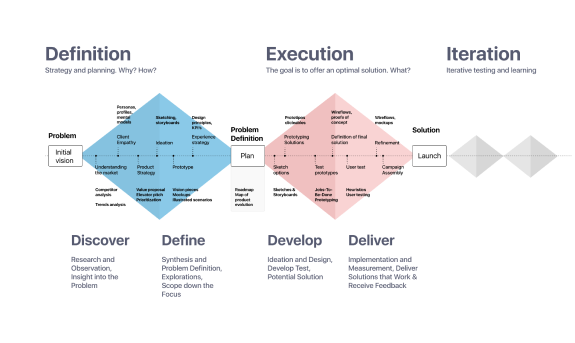
Across projects, designers repeatedly asked the same questions: which method fits this stage, how should it be run, and do the materials need to be rebuilt every time? Yiting and I initiated an internal toolkit that made methods easier to find, adapt and share while keeping room for professional judgment.在不同项目中,设计师反复遇到同样的问题:当前阶段适合哪种方法、具体怎么执行、研究材料是否每次都要重新搭建?我与设计师 Yiting 发起内部工具包项目,让方法更容易被发现、调整与共享,同时保留设计师的专业判断空间。
The team lacked a shared guide for choosing methods at different stages.团队缺少按项目阶段选择方法的共同指南。
Plans, scripts and reports were repeatedly recreated.计划、脚本与报告在结构相近时仍被反复重做。
Useful practices lived in personal files and were difficult to improve together.有效经验散落在个人文件中,团队难以共同改进。
A template is a starting point, not a one-size-fits-all answer. Every method must be adjusted to the actual users, context and decision at hand.模板只是起点,不是一套适用于所有情况的答案。每种方法都必须根据真实用户、项目环境与待解决的决策进行调整。
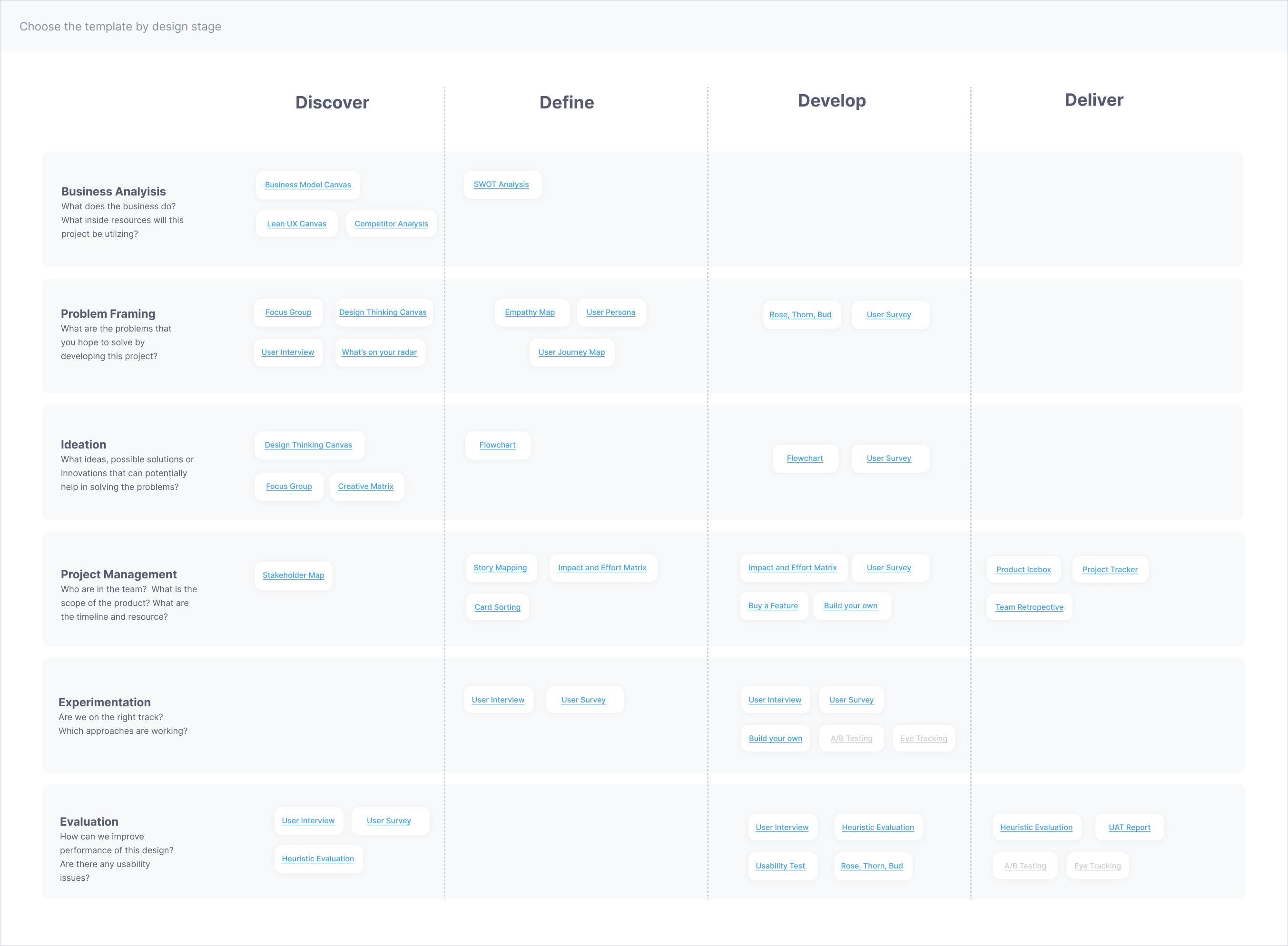
The toolkit maps methods to four design stages and six recurring problem types, helping designers move from a project question to an appropriate method.工具包把方法映射到四个设计阶段与六类常见问题,帮助设计师从项目问题出发找到合适的方法。
Understand the business, users and problem landscape.理解业务、用户与问题环境。
Frame evidence and align direction.归纳证据并统一方向。
Generate, prototype and evaluate solutions.探索、原型化并评估方案。
Validate, launch and learn from outcomes.验证、交付并从结果中学习。
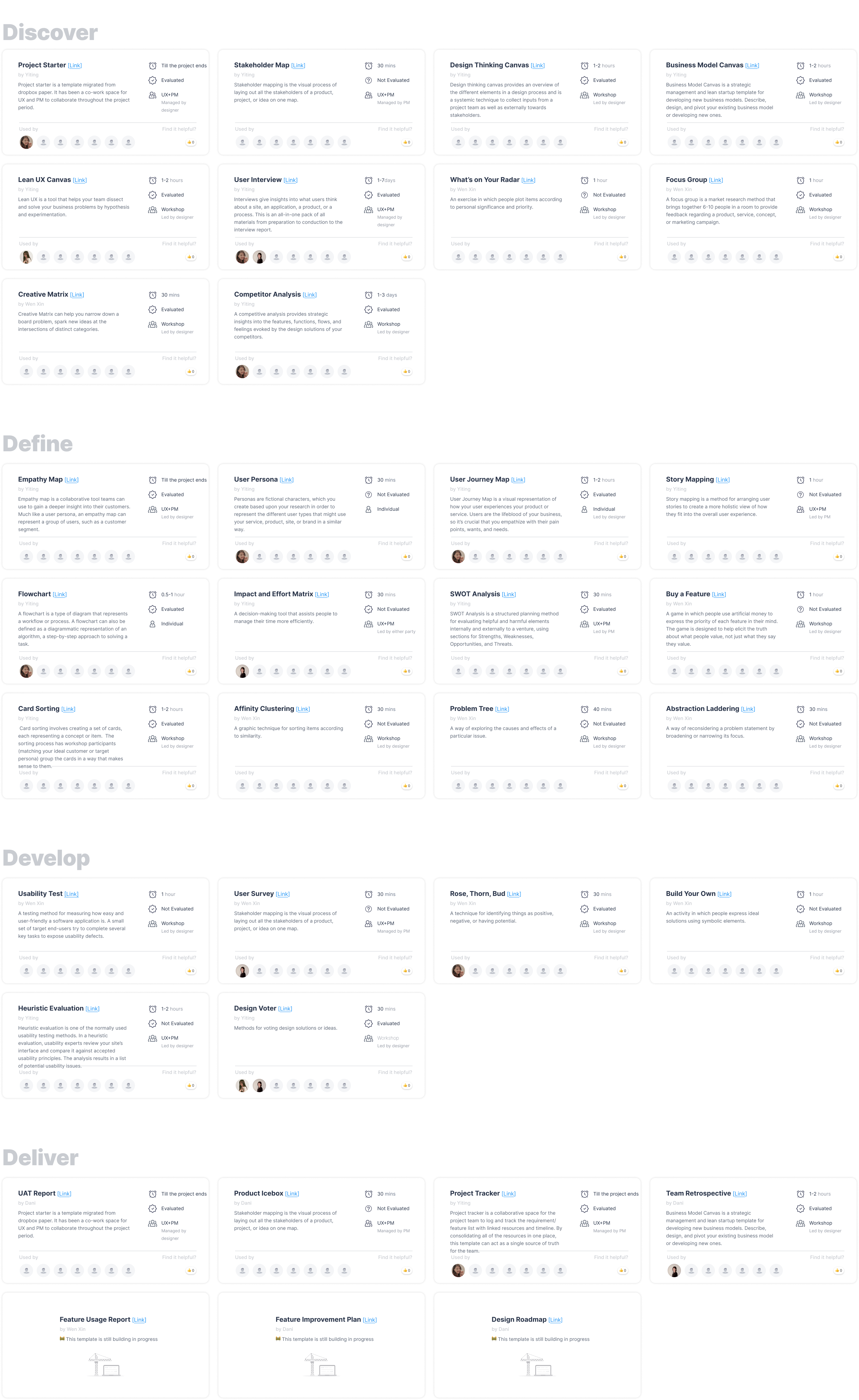
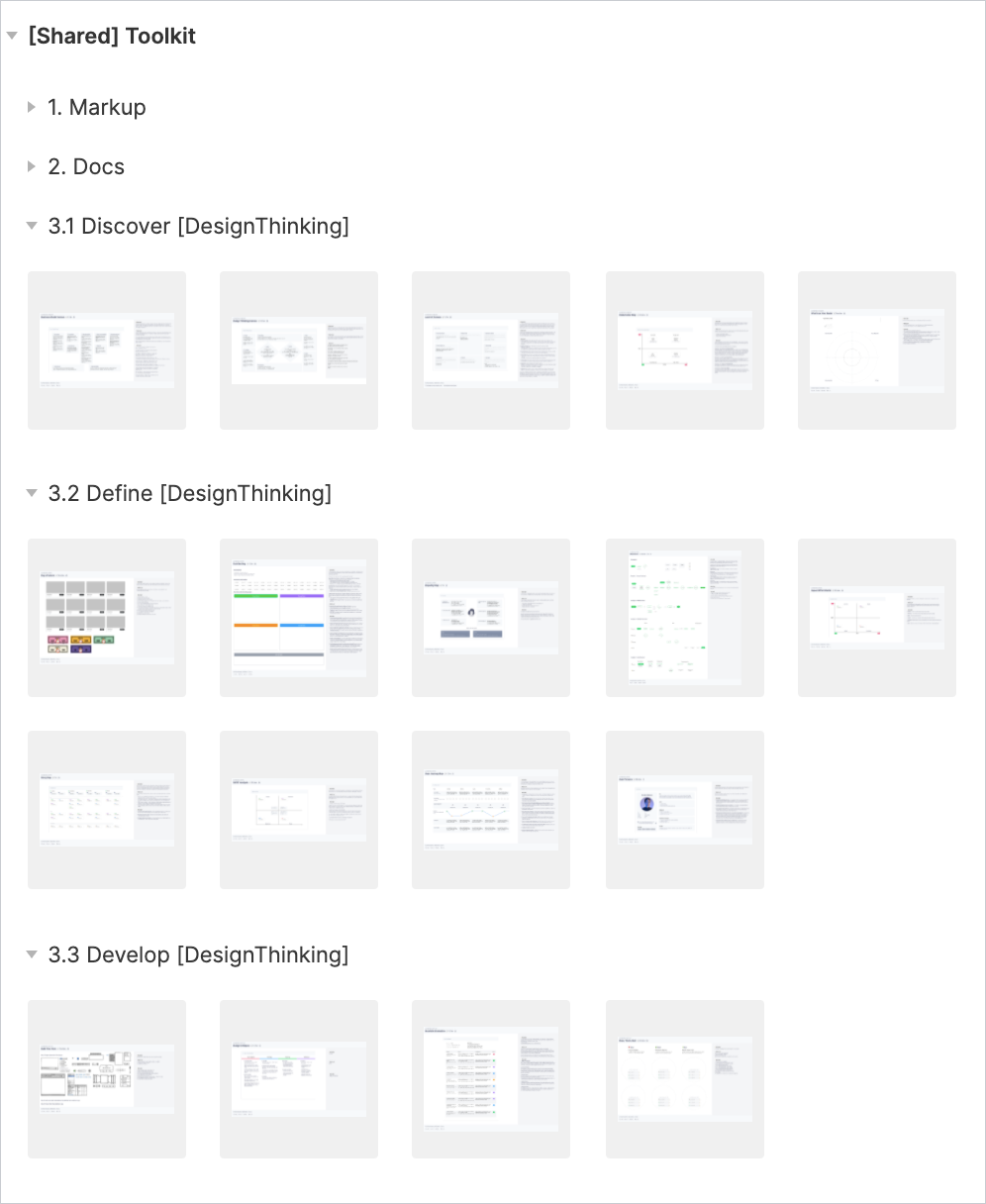
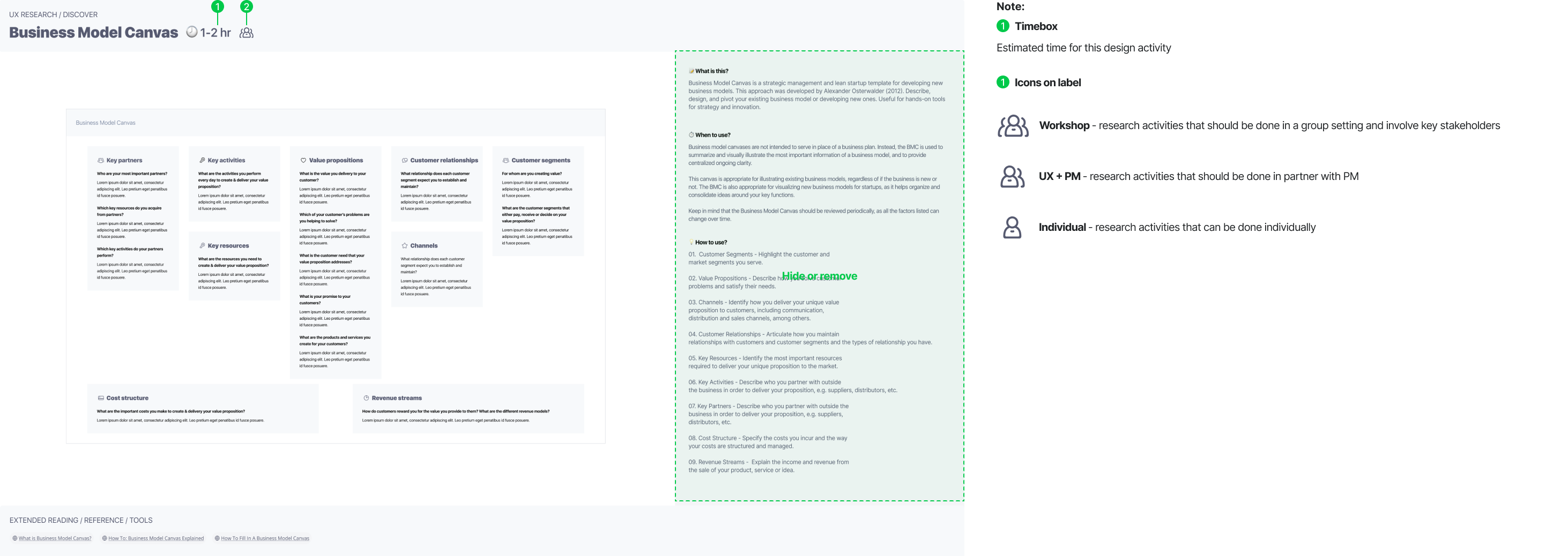
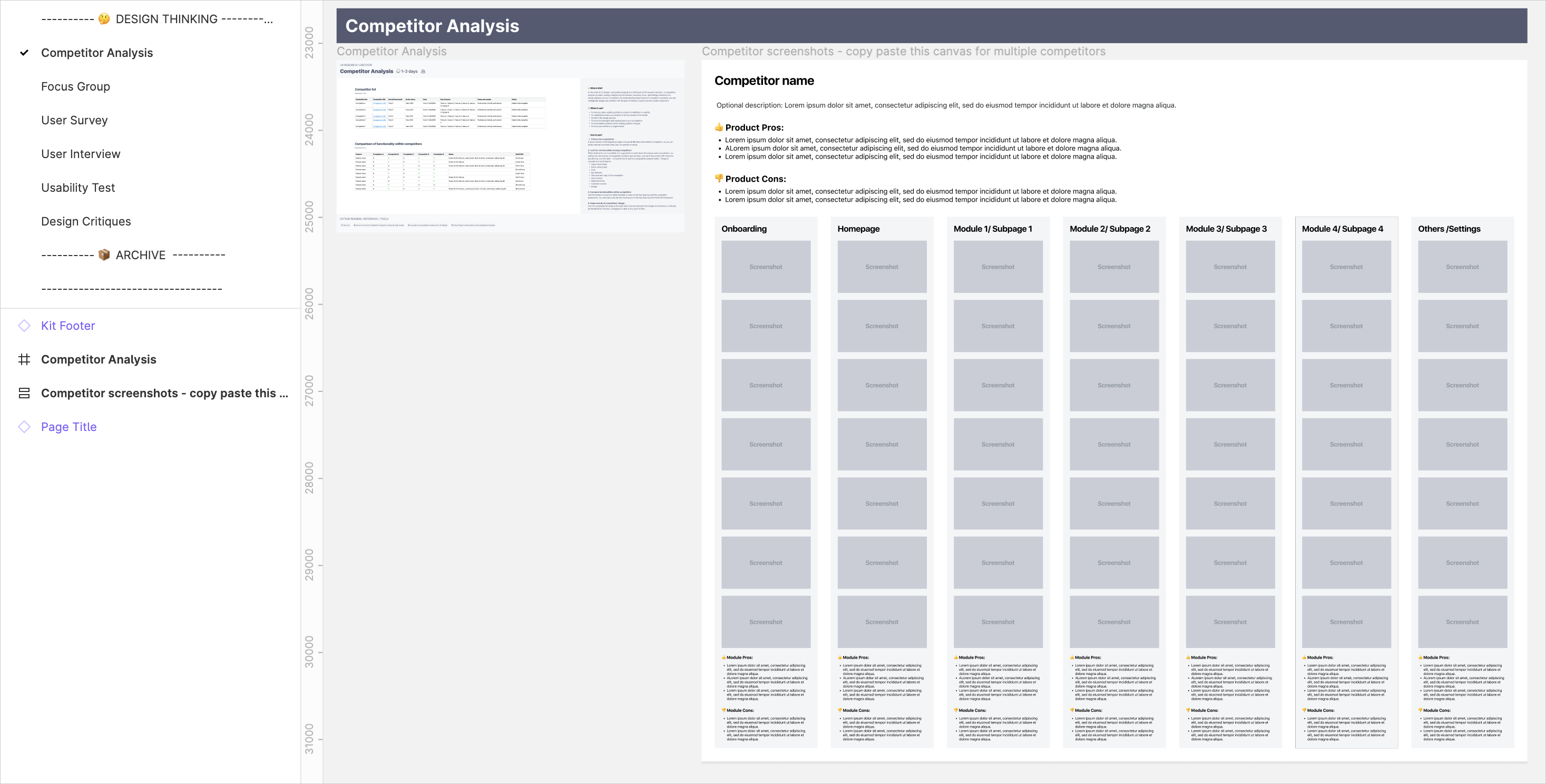
The shared Figma library combines a complete catalog with lightweight components and deeper project templates. Designers copy only what they need instead of inheriting a rigid process.共享 Figma 方法库将完整目录、轻量组件与深度项目模板结合起来。设计师按需复制,而不是被迫继承一套僵化流程。
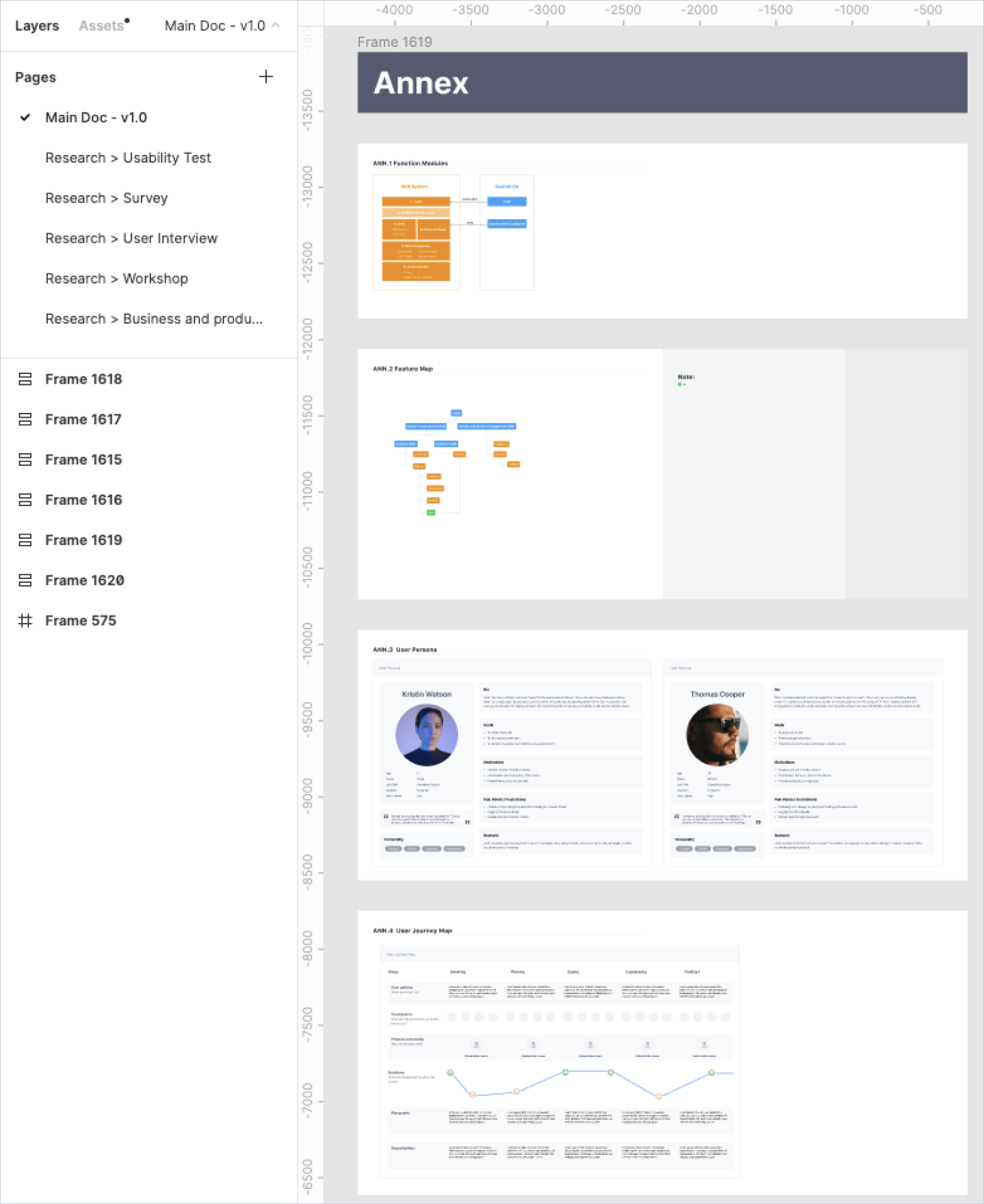
Quick activities can be dragged directly into a project. Comprehensive studies use a project template with a main document and annex, keeping decisions visible while evidence remains accessible.轻量活动可以直接拖入项目;完整研究则使用预置主文档与附件区的项目模板,让关键决策保持醒目,同时保留完整证据。
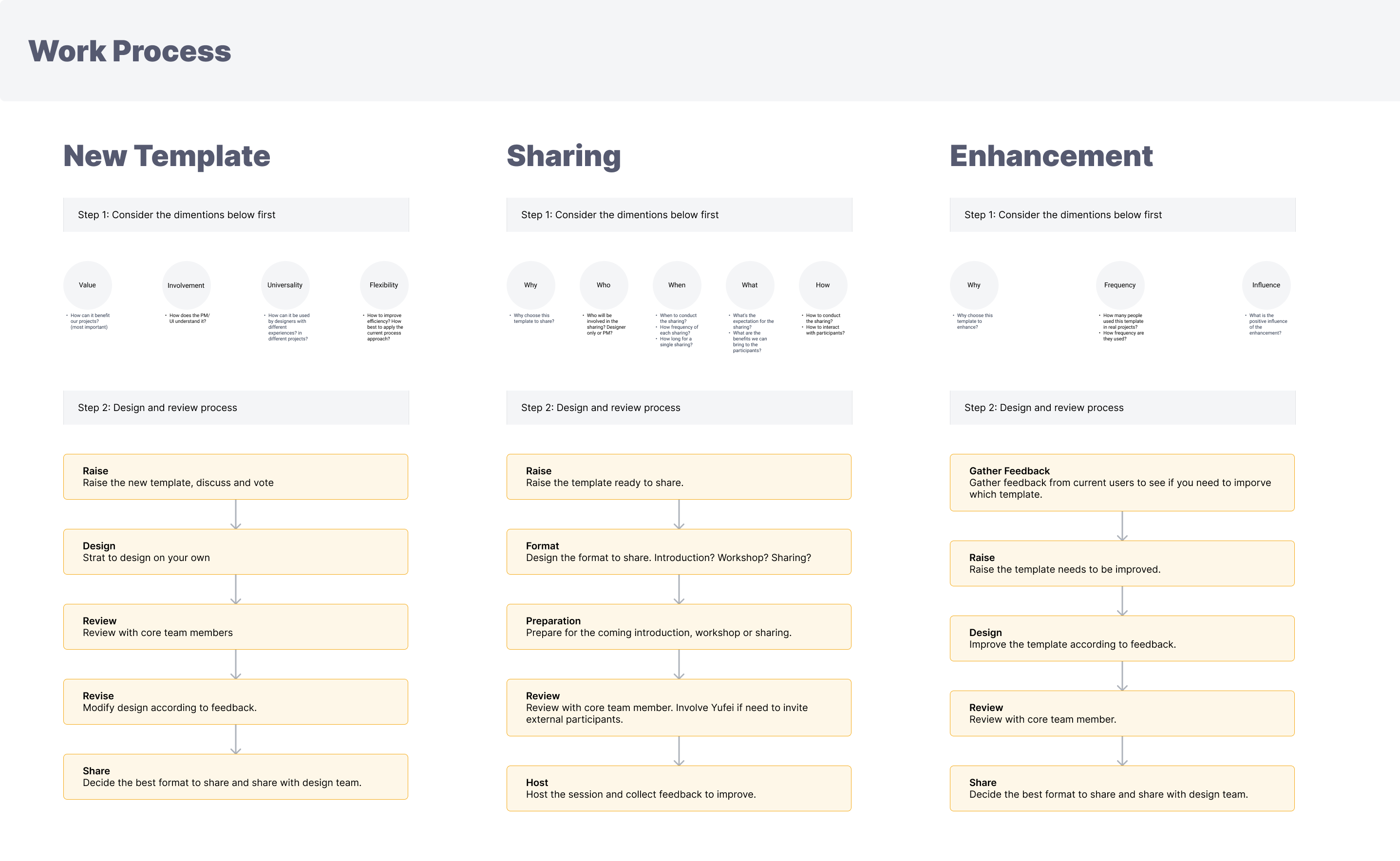
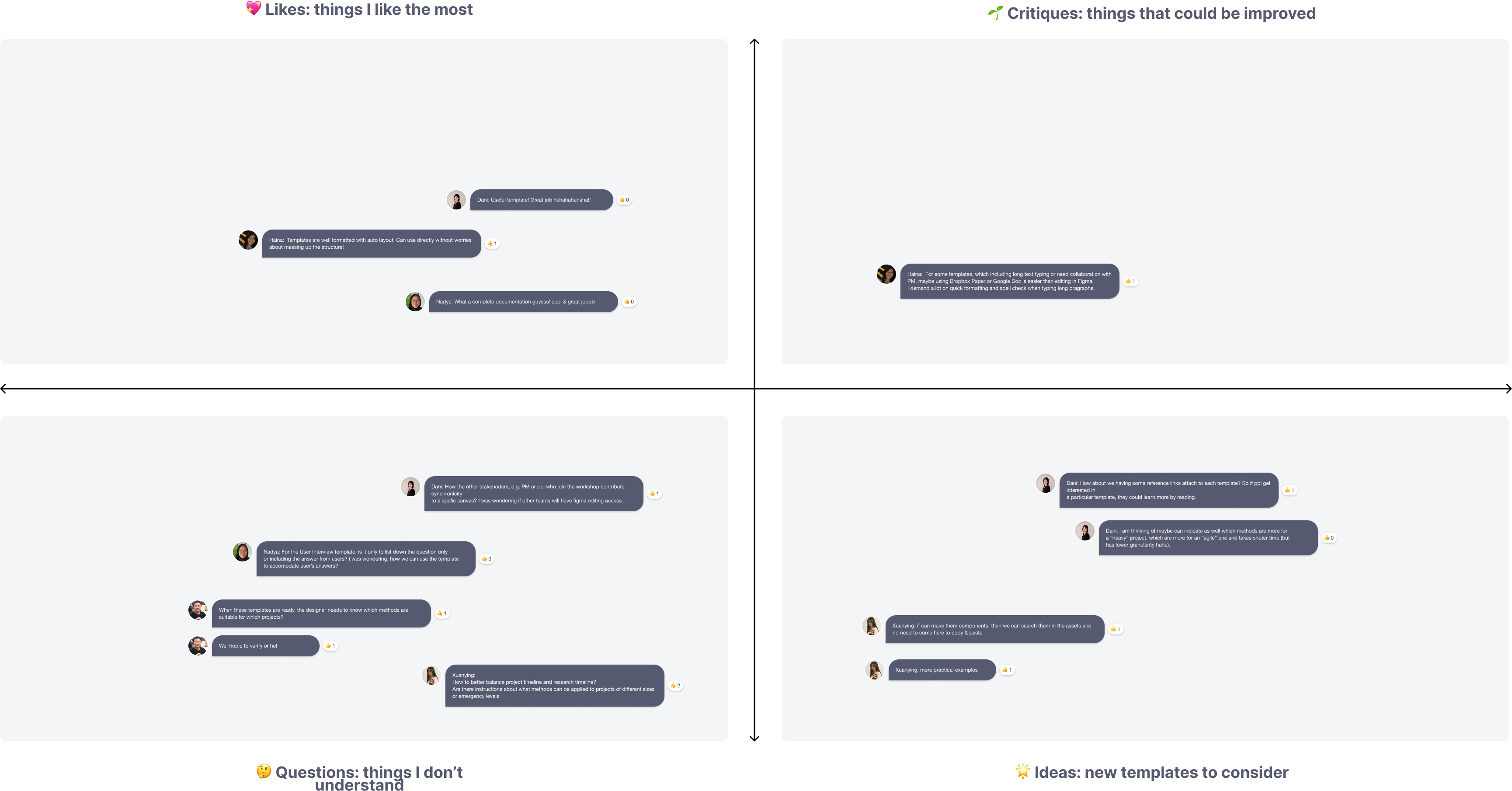
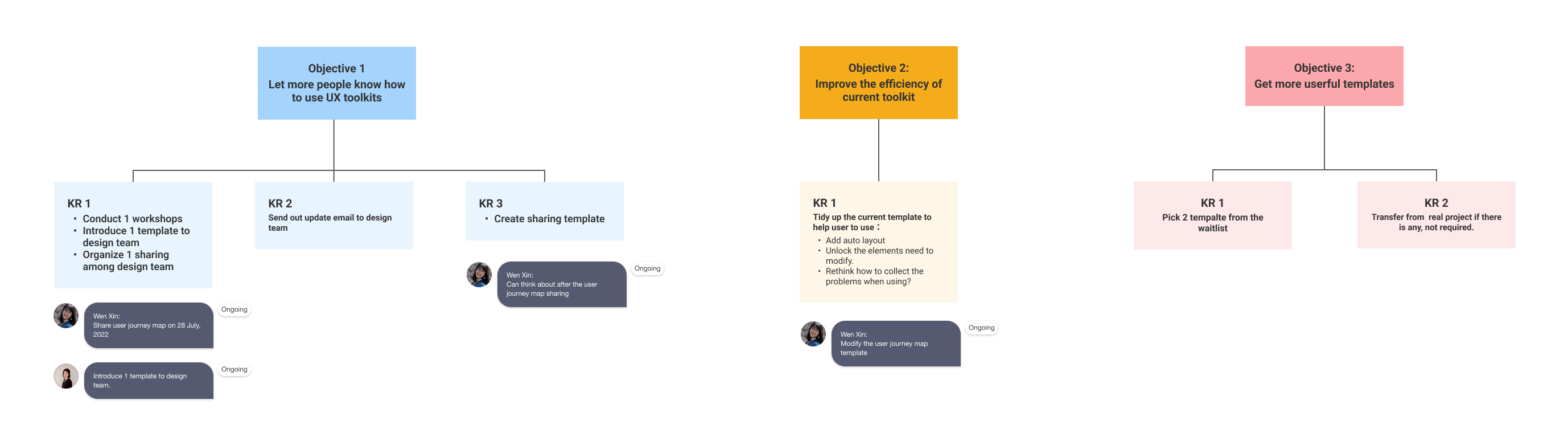
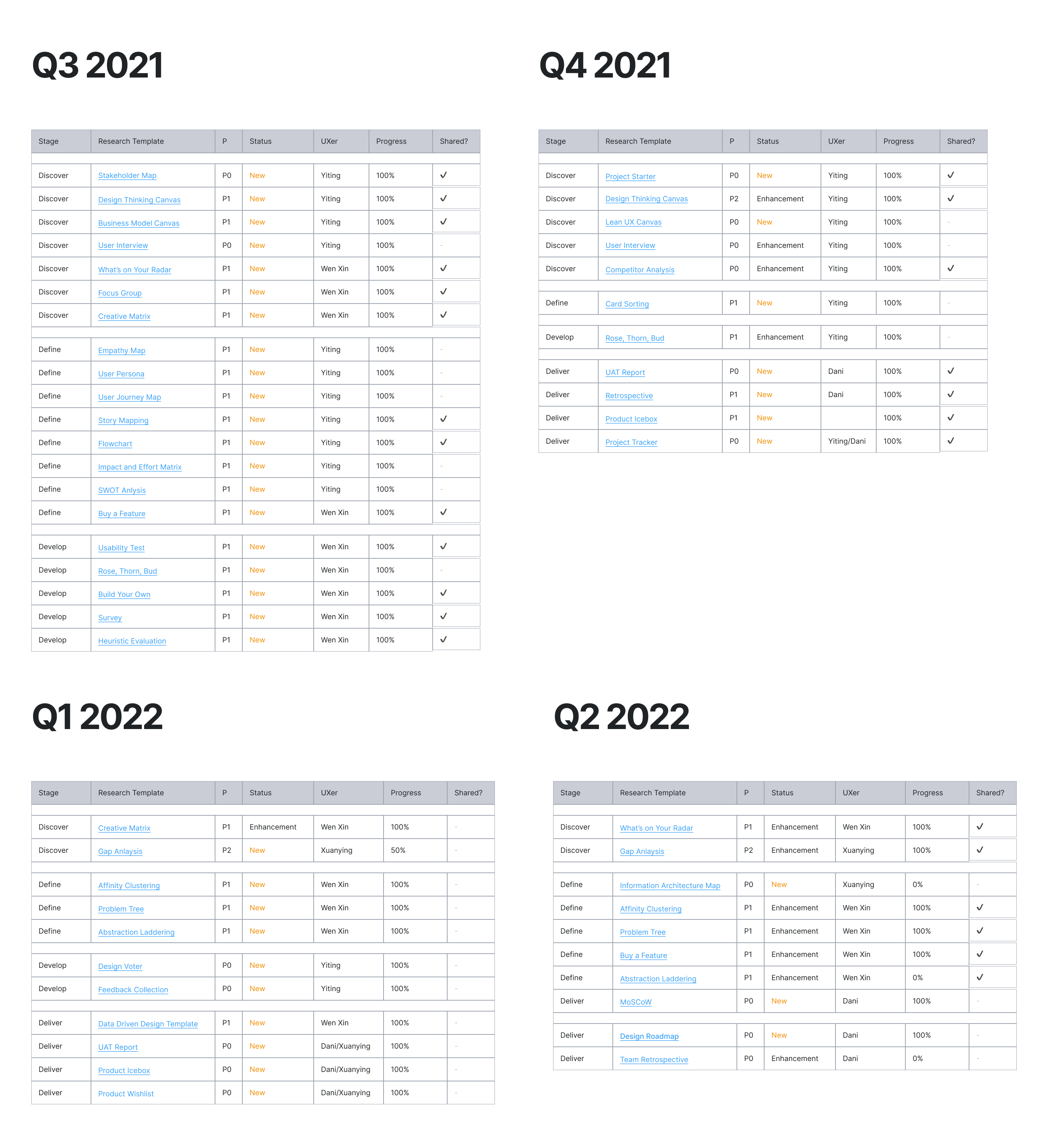
We designed operating paths for creating, sharing and improving templates, supported by quarterly goals, an update log and a visible feedback canvas.我们为创建、分享与改进模板设计了运行路径,并通过季度目标、更新日志和公开反馈画布持续维护。
Raise the need, design, review, revise and release.提出需求、设计、评审、修改并发布。
Prepare workshops or sharing, then collect participant feedback.准备工作坊或分享会,再收集参与者反馈。
Gather usage evidence, review changes and publish enhancements.收集使用证据、评审修改并发布改进。
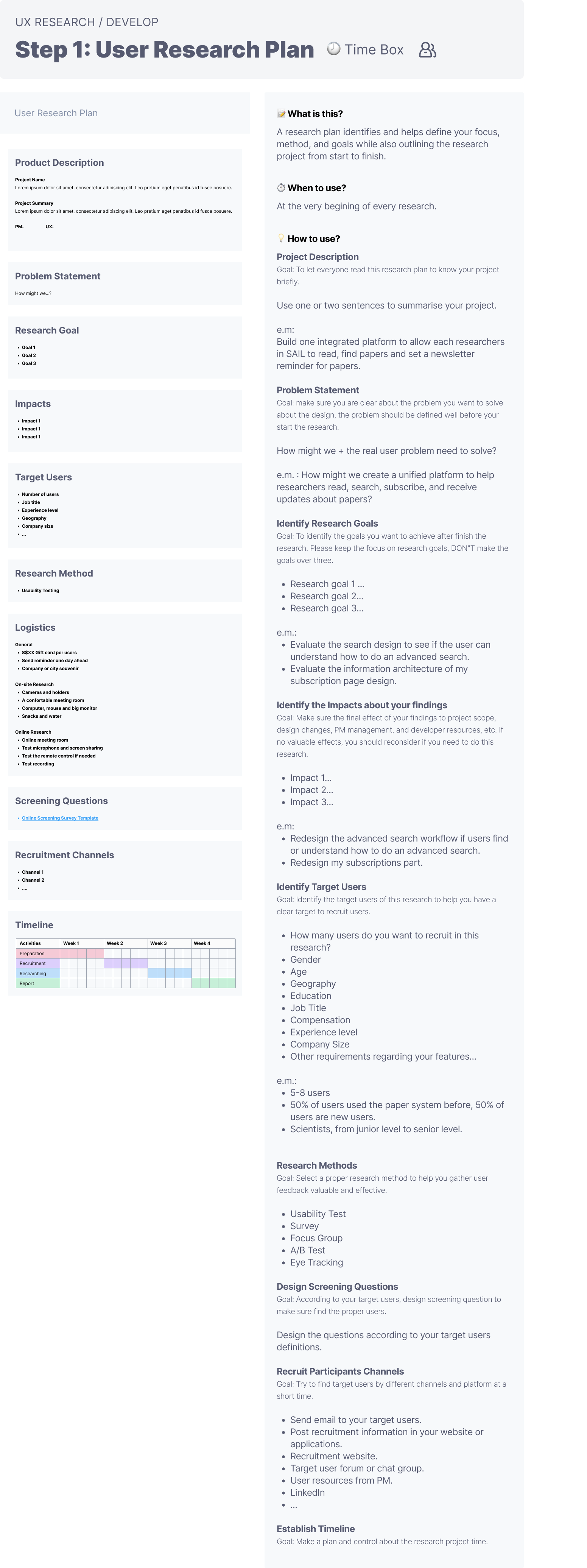
Planning clarifies the decision and participants, the script keeps sessions consistent, and the report turns observations into prioritized iteration opportunities.研究计划明确决策目标与参与者,测试脚本保证执行一致,最终报告把观察转化为有优先级的迭代机会。
Define goals, participants, method and scenarios.明确目标、参与者、方法与场景。
Keep moderation and note-taking aligned.统一主持与记录方式。
Connect findings, issues and recommendations.连接发现、问题与建议。
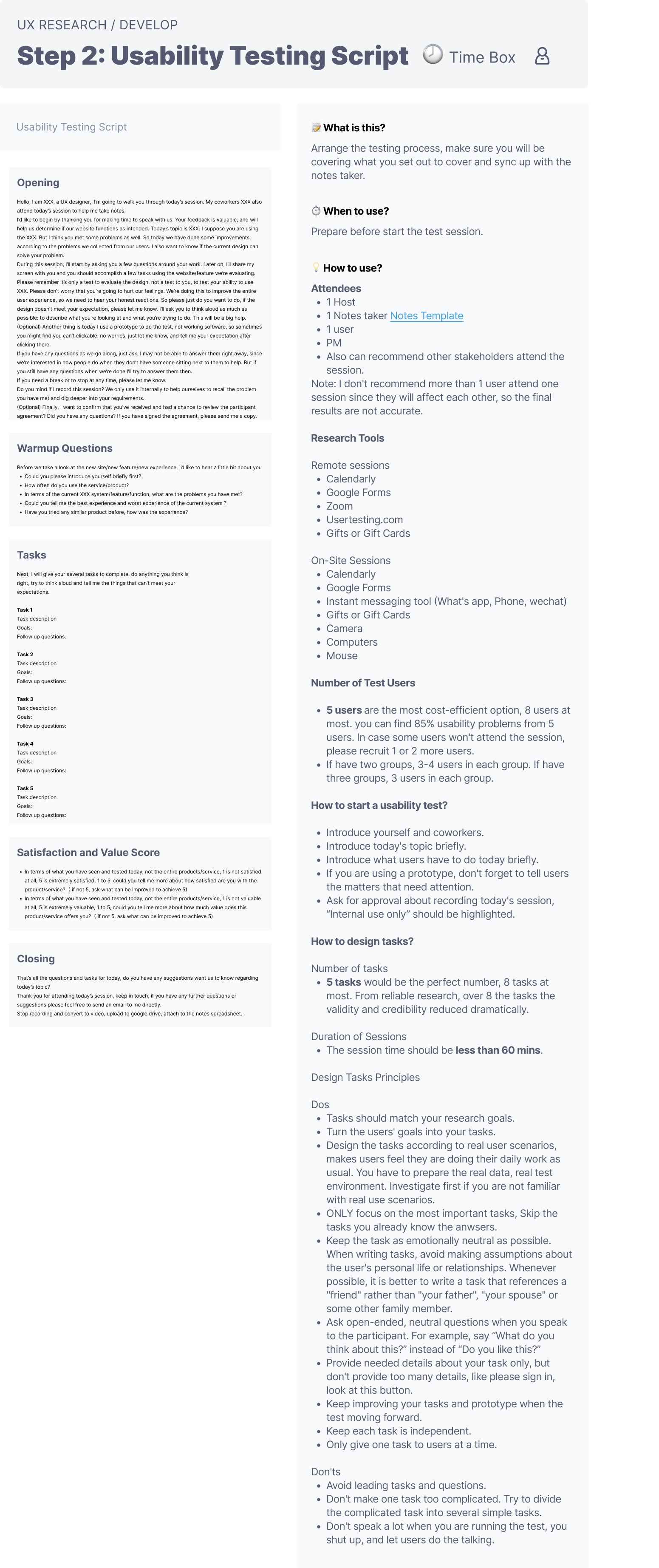
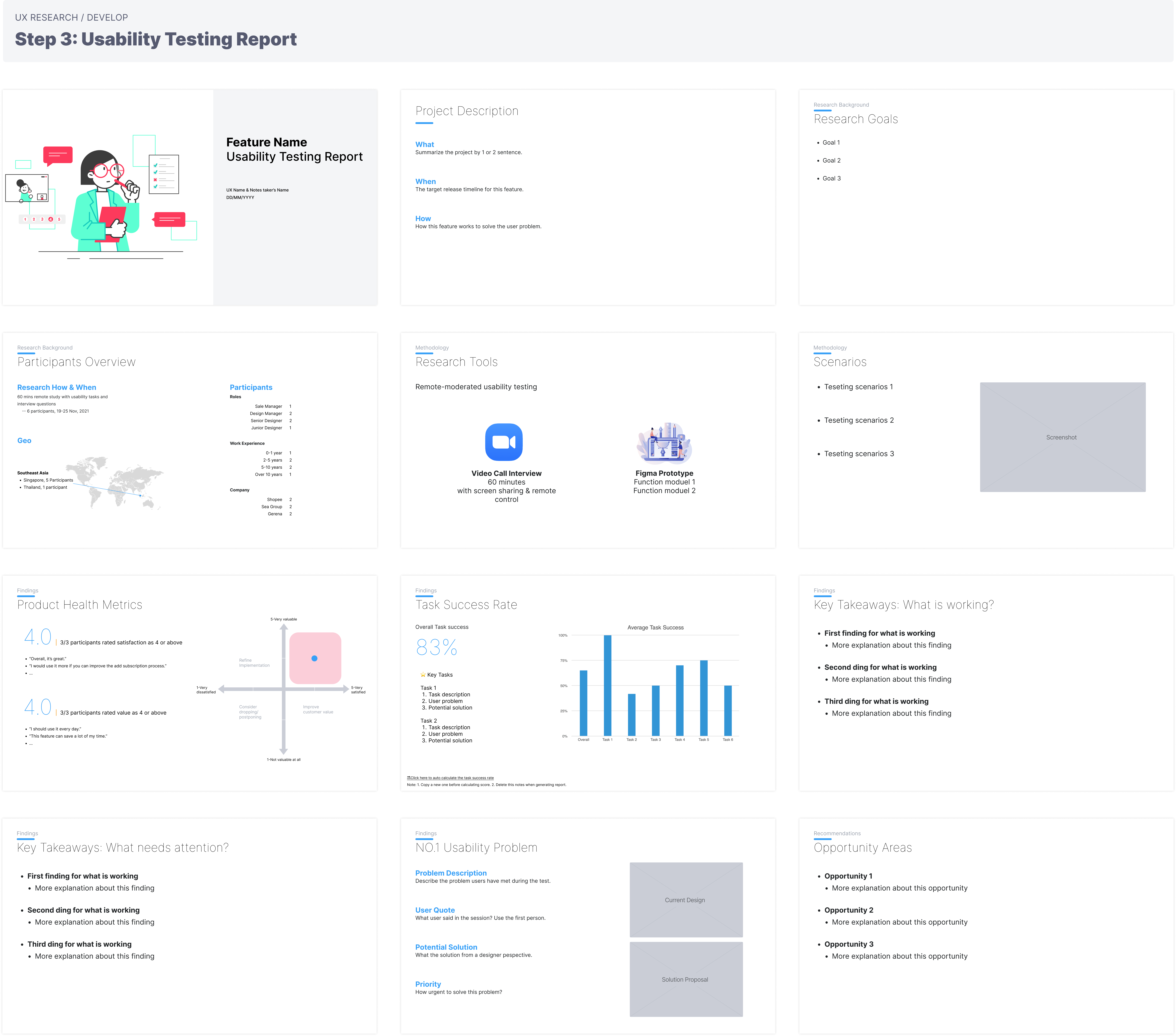
Workshops helped designers apply selected methods. Follow-up sharing brought project experience back to the team, turning individual usage into collective learning.工作坊帮助设计师应用具体方法,后续分享再把项目经验带回团队,让个人使用转化为集体学习。
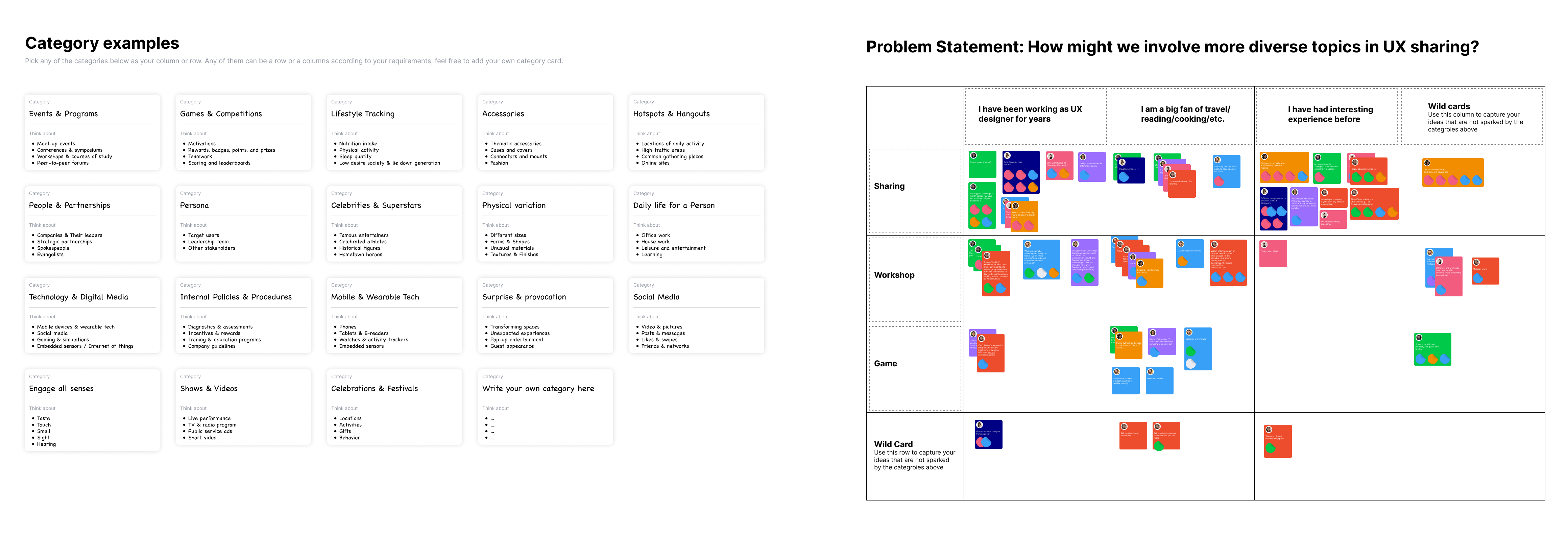
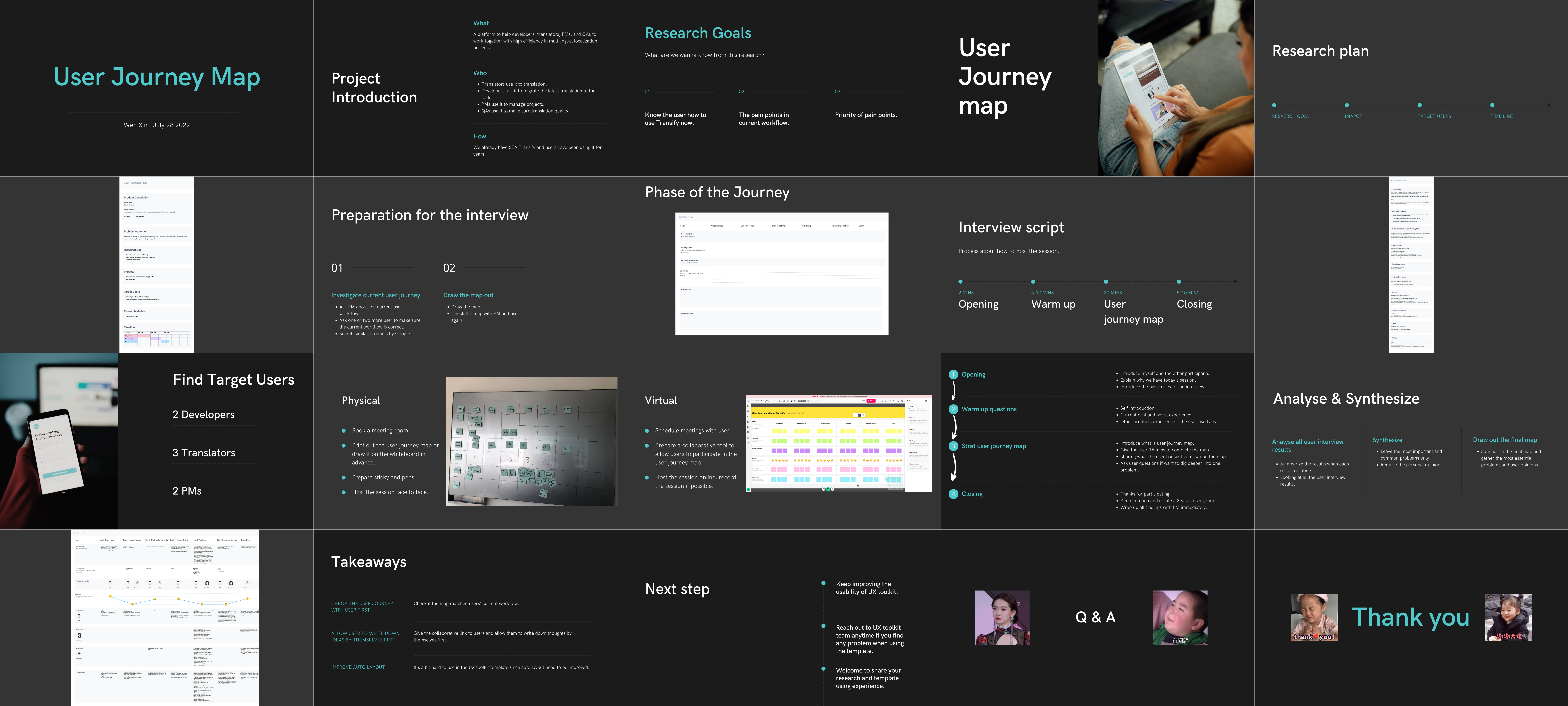
Explain purpose, boundaries and timing.说明用途、边界与适用时机。
Adapt the template to a concrete challenge.针对具体问题调整模板。
Turn experience into the next improvement.把经验转化为下一轮改进。
The result was a lightweight internal platform connecting method selection, reusable materials, contribution, enablement and continuous improvement.最终形成了一套轻量内部平台,连接方法选择、材料复用、团队贡献、推广使用与持续改进。
templates across the design process.个模板覆盖设计流程。
stages make the library easier to navigate.个阶段让方法更易查找。
a contribution loop keeps the toolkit evolving.持续贡献闭环让工具包不断演进。
Standardization should remove avoidable setup work, not remove the judgment that makes research useful.标准化应该消除不必要的准备成本,而不是消除让研究真正有用的专业判断。
This project strengthened my understanding that internal platforms need both a useful artifact and an operating model: people must know how to find it, adapt it, contribute to it and improve it over time.这个项目让我进一步理解:内部平台既需要有用的产物,也需要运行机制。团队必须知道如何找到、调整、贡献并持续改进它。