Role
UX Designer for core journeys
Product definition, research synthesis, end-to-end interaction design, and launch support.
A Payment Card Designed Around Creator Earnings 围绕 TikTok 创作者收入场景打造的专属支付卡
Creators often had to move LIVE earnings through external payout methods before they could use them. Creator Card introduced a lower-friction route from eligible earnings to a Visa debit card, with digital-wallet provisioning, card controls, and everyday payment utility. 创作者通常需要先把 LIVE 收益转至外部收款方式,才能实际使用。Creator Card 为符合条件的收益提供更低摩擦的 Visa 借记卡入账路径,并覆盖数字钱包绑定、卡片控制与日常支付。
Creator Card connected eligible TikTok LIVE earnings to a Visa debit-card experience. The UK MVP was delivered through a Banking-as-a-Service model with Stripe and Visa. It added a lower-friction route for receiving, managing, and spending creator earnings while preserving existing bank and PayPal payout options.
Creator Card was designed around creator earnings rather than as a generic card proposition. The first priority was to reduce payout friction and make eligible earnings easier to use. Card controls, digital-wallet provisioning, and creator-relevant benefits extended that utility into everyday payment.
Before Creator Card, creators often moved earnings through bank accounts, PayPal, Payoneer, or other payout routes before the money became available for use. Fees, settlement time, and fragmented status information made that final stage feel detached from the work that generated the income.
Fee structures varied by method and could erode net earnings, particularly for creators who transferred funds frequently.
Creators had to wait for processing and settlement before earnings could support equipment, promotion, or everyday expenses.
Generic payout methods provided utility but did not connect financial management to the creator’s identity, tools, or growth journey.
The benchmark started with Revolut, Monzo, Apple Card, Wise, and Up because creators compared financial products with the apps they already used. Karat and OTH were then reviewed to understand how creator identity, influence, and ecosystem relationships could translate into relevant financial value.
Reuse verified context where permitted, collect delivery details only when required, and separate virtual activation from physical-card fulfilment.
Balance, inflow and outflow, transaction state, fees, card controls, and dispute routes need greater clarity than a generic creator balance page.
Card design and creator-specific benefits can support ownership, but they should follow reliable payments and account controls.
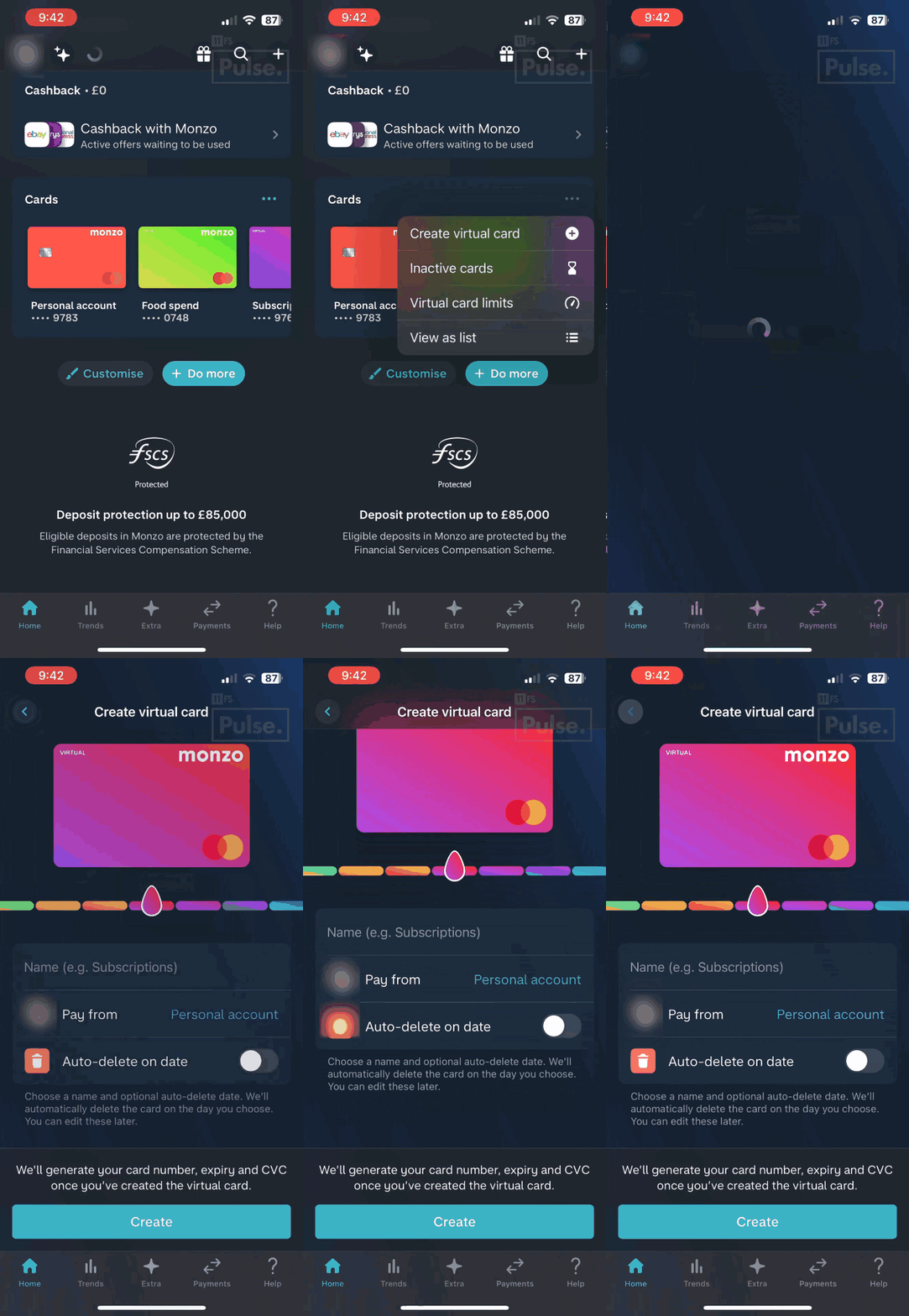
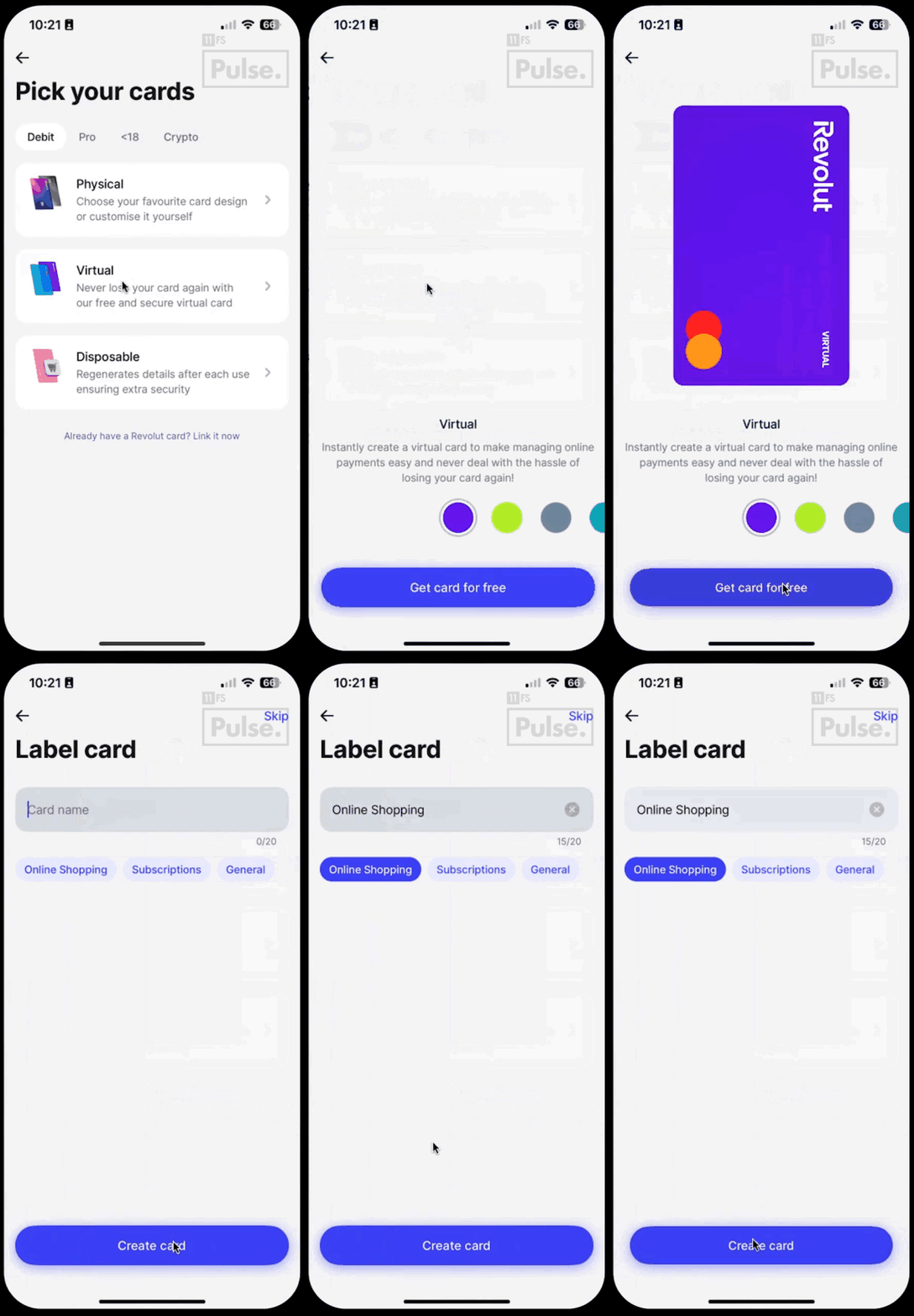
Leading debit-card experiences treated the virtual card as an activation journey and delayed physical-card information until fulfilment. The implication for Creator Card was to reuse TikTok identity and earnings context only where regulation and partner controls allowed, while keeping required consent and KYC explicit.
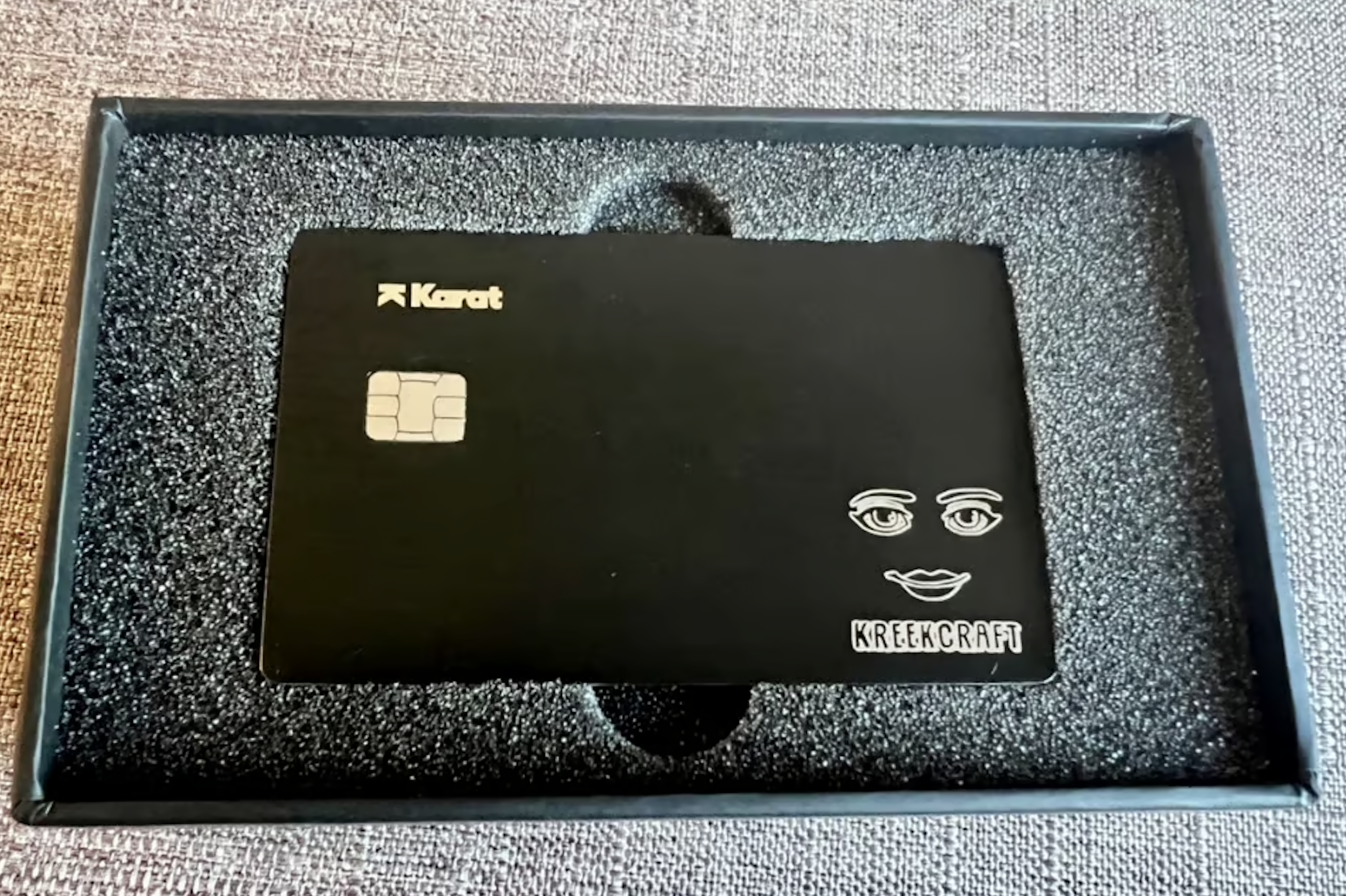
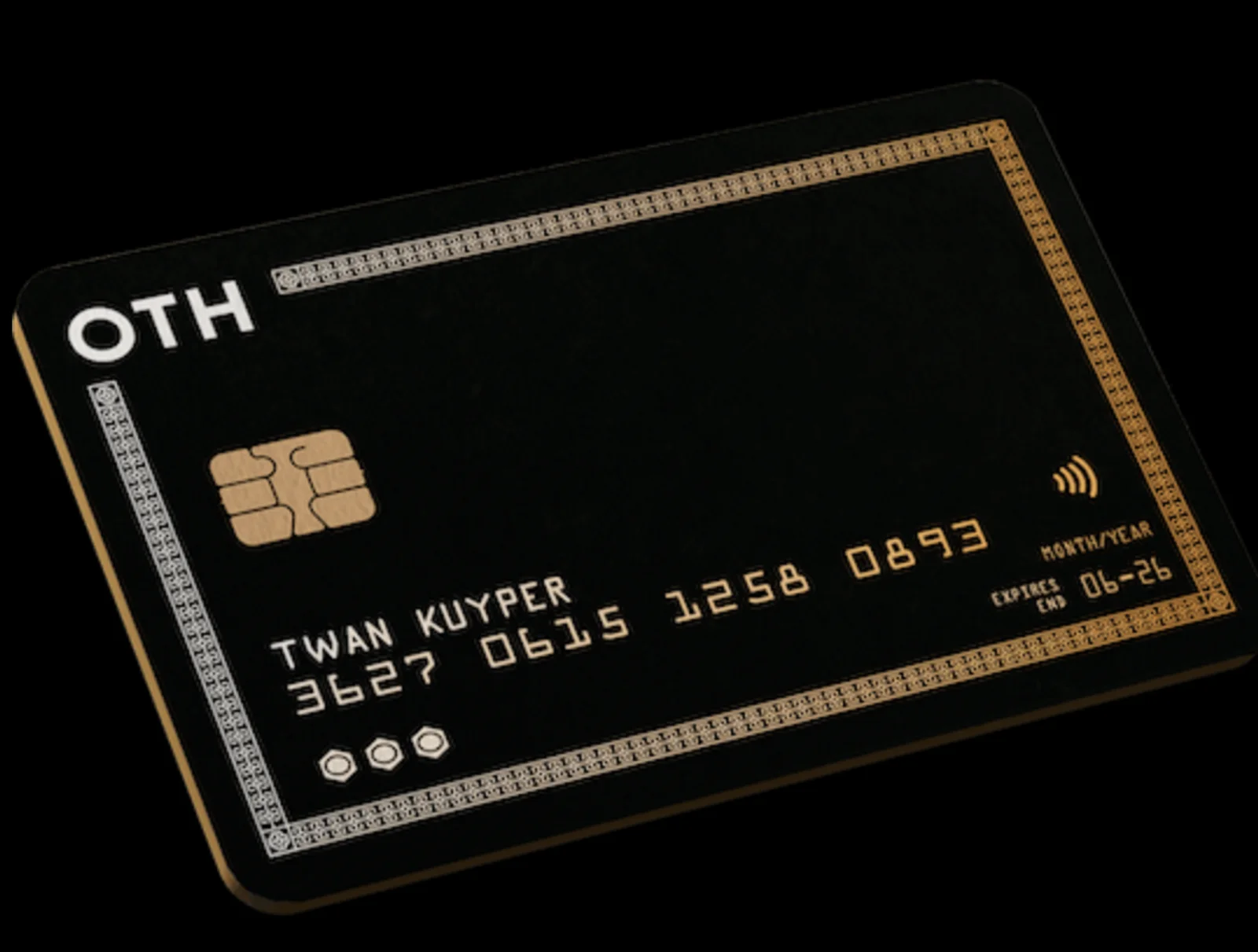
Karat demonstrated the value of creator-specific financial services and community distribution. OTH illustrated how social identity and brand relationships could shape access. Creator Card did not copy either model; the transferable insight was to connect financial utility to creator workflows and TikTok ecosystem context.
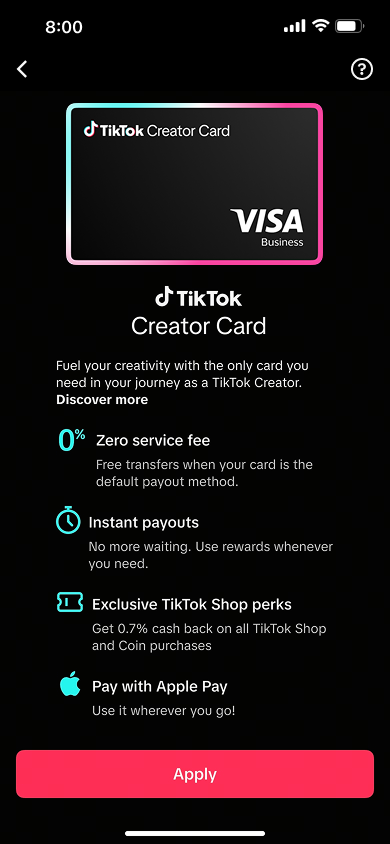
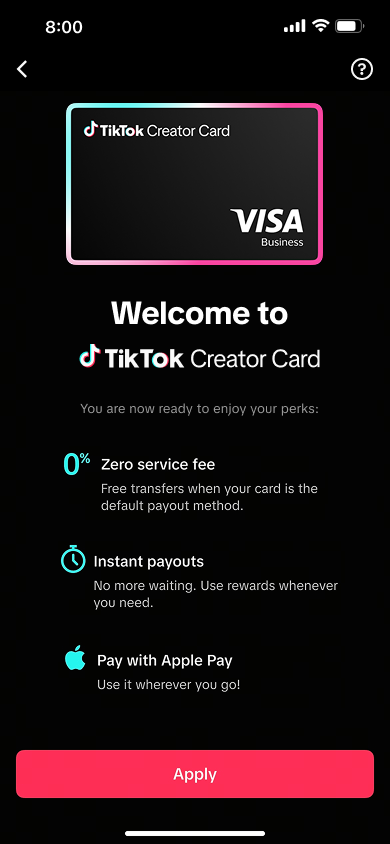
This was a qualitative concept comparison, not a statistically powered A/B experiment. Across the interview sample, the version with 0.7% TikTok Shop cashback did not improve stated application intent. Fee-free access to eligible earnings, lower transfer cost, and account security were more important.
The product was evaluated as an earnings and payment system rather than by card issuance alone. The measurement framework therefore combined transaction volume, creator adoption, income penetration, customer-risk signals, and unit economics.
Measure real money movement across earnings credited to the card, card spend, and supported transfers.
Track both the number of creators using the card and the share of eligible creator earnings routed to it.
Monitor complaints, disputes, account-security issues, and material changes in creator behaviour.
Ensure interchange and permitted service revenue can support programme and operational costs.
Make eligible LIVE earnings available through a transparent card route while retaining other payout choices.
Support external Visa acceptance and digital-wallet provisioning, not only payment within TikTok.
Use card personalisation and relevant benefits to build ownership once essential financial information and controls are clear.
We conducted in-person and remote depth interviews with 12 UK creators, ranging from approximately 11,000 to 1.3 million followers. The study tested the product proposition, account model, benefit hierarchy, and critical onboarding decisions. Findings are directional because of the sample size.
Creators were concerned about access to card funds if their TikTok account was restricted or compromised. The MVP therefore required clear card security controls and a support route that did not depend on one in-app entry point.
All 12 participants primarily used debit cards, and several expressed strong concern about credit products. This evidence supported a debit-card MVP rather than a credit-led roadmap.
Adding 0.7% TikTok Shop cashback did not improve stated application intent in the concept comparison. It was removed from the core proposition to avoid setting an expectation the benefit could not meet.
The sample was divided between mobile-wallet-first and physical-card-first behaviour. The MVP remained virtual-card first, while physical issuance and fulfilment were treated as a distinct product phase.
The final design covered five connected scenarios: discovering the card in an earnings context, activating the account, moving and managing money, provisioning the card to a digital wallet, and using it for online or in-store payment.
Creator Card appeared where creators already reviewed money: Creator Balance, LIVE rewards, withdrawal, and payout-method selection. Each entry explained the relevant advantage before asking the creator to begin KYC.
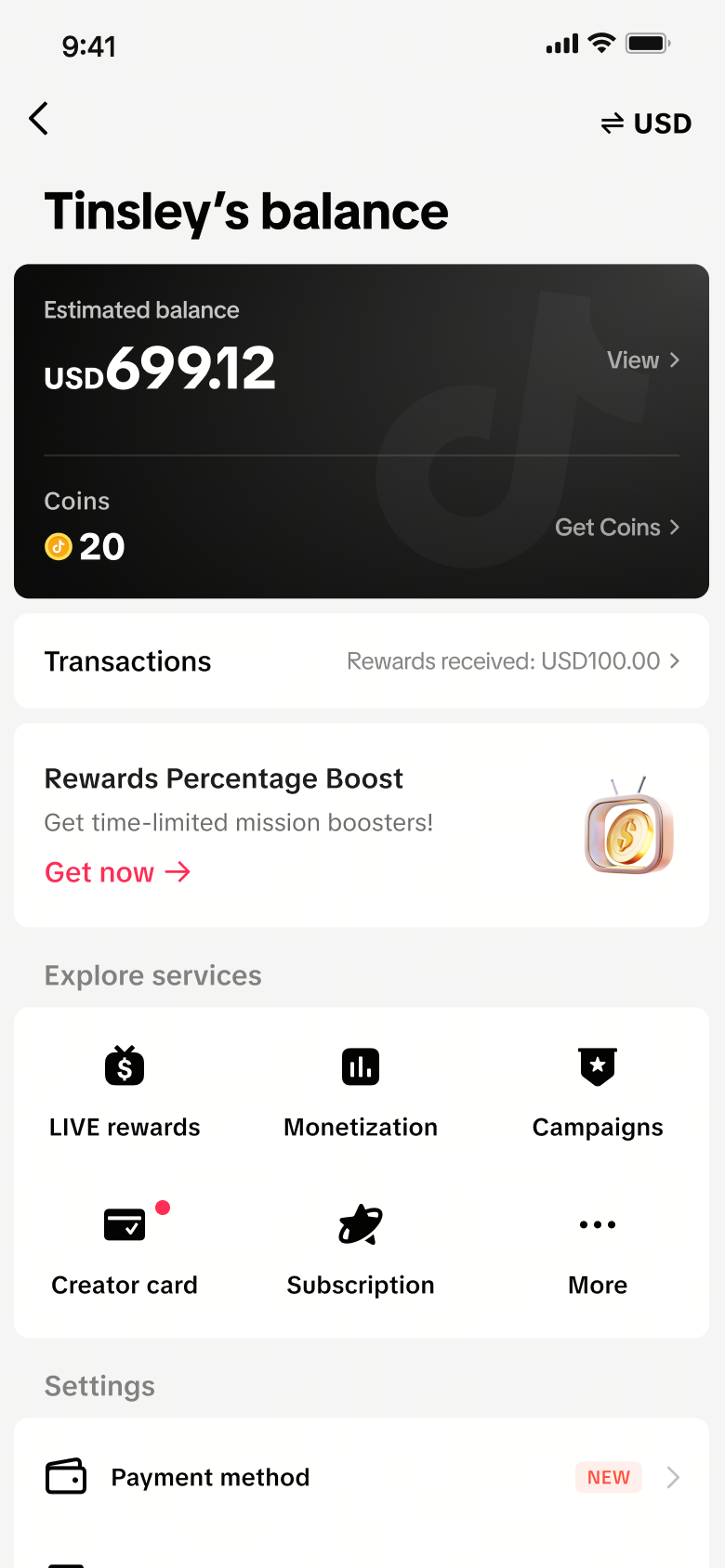
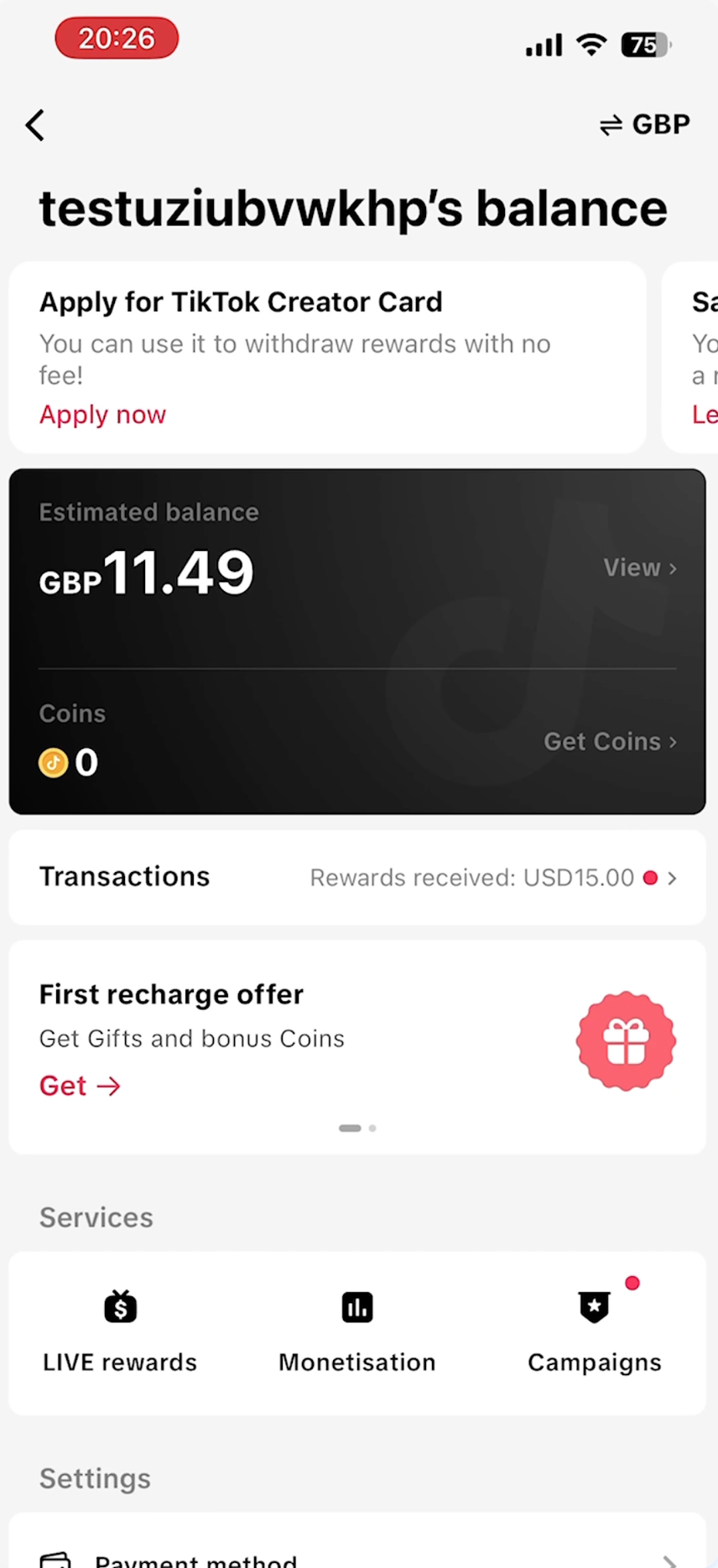
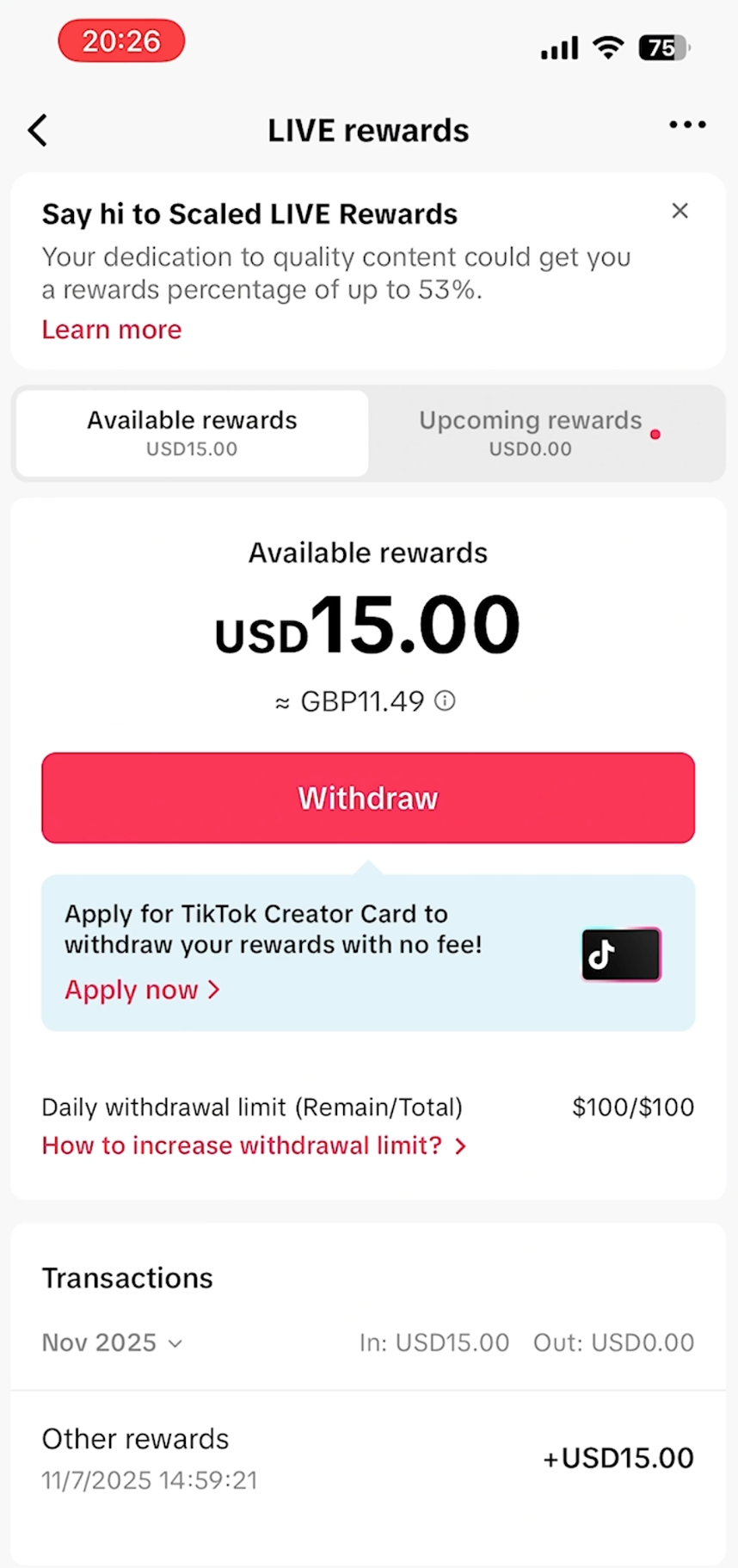
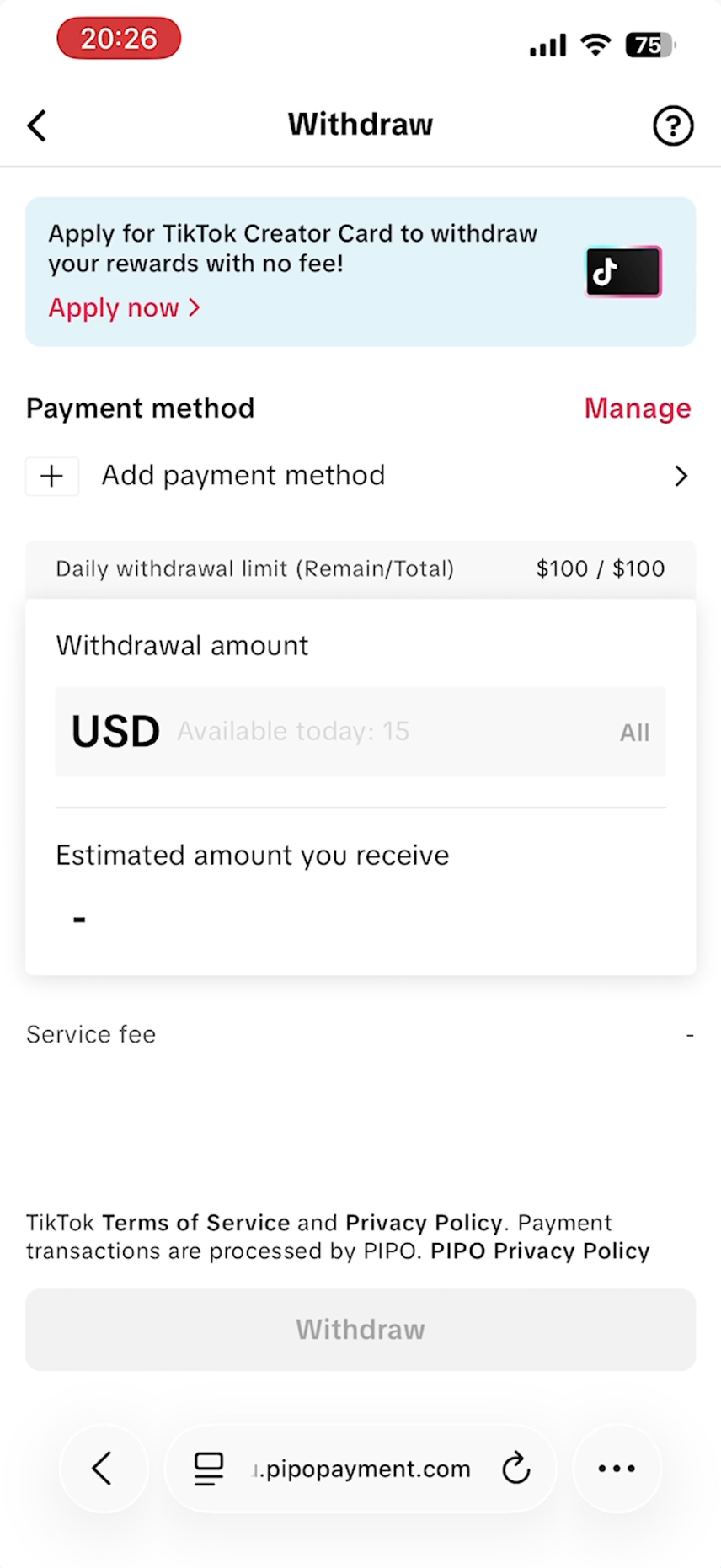
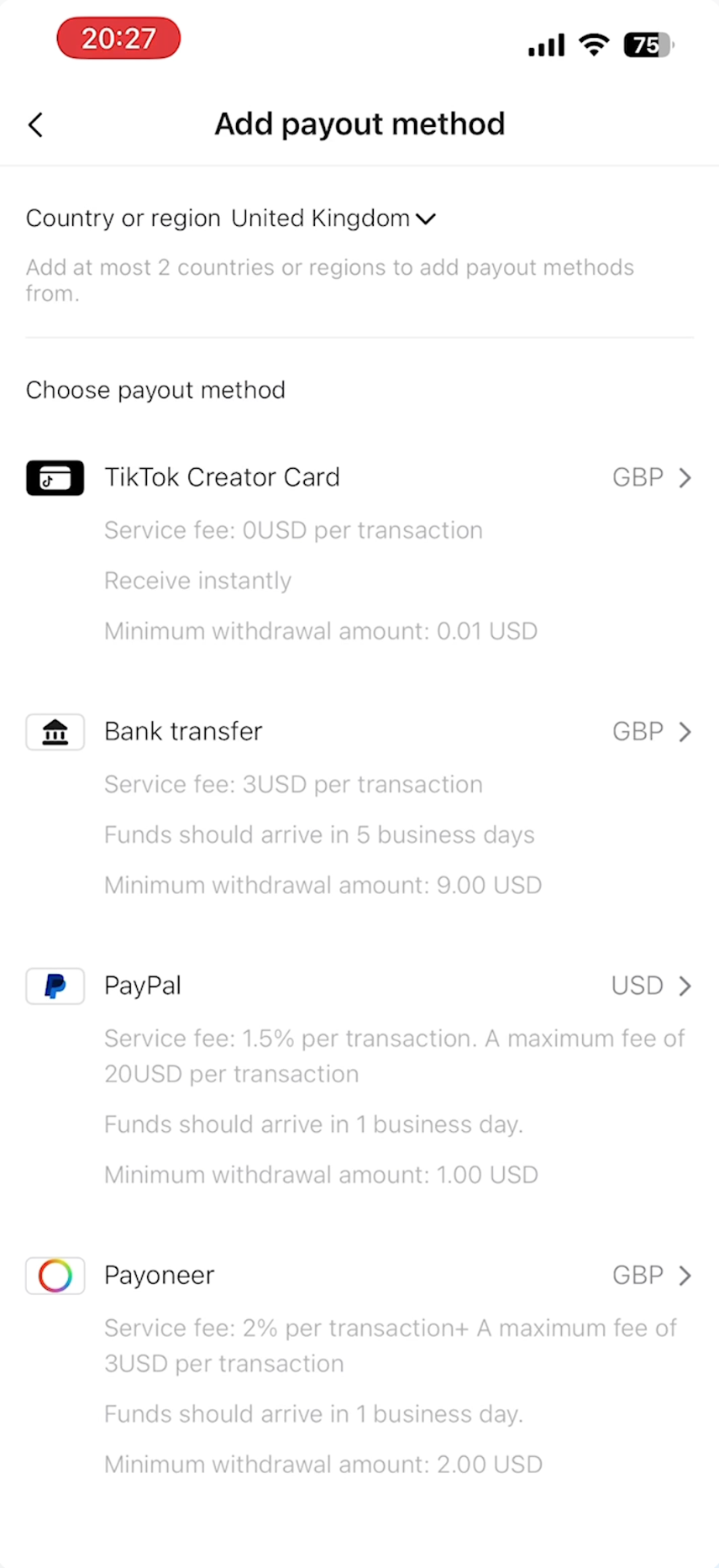

The flow reused eligible TikTok identity, contact, and earnings context where permitted. Agreements, phone verification, KYC, card selection, and PIN setup remained clear, with fees disclosed before commitment.
The card hub supports eligible LIVE earnings transfers, outbound transfers, fee and status information, card security controls, transaction detail, statements, and dispute entry points. Balance visibility remains the primary hierarchy.

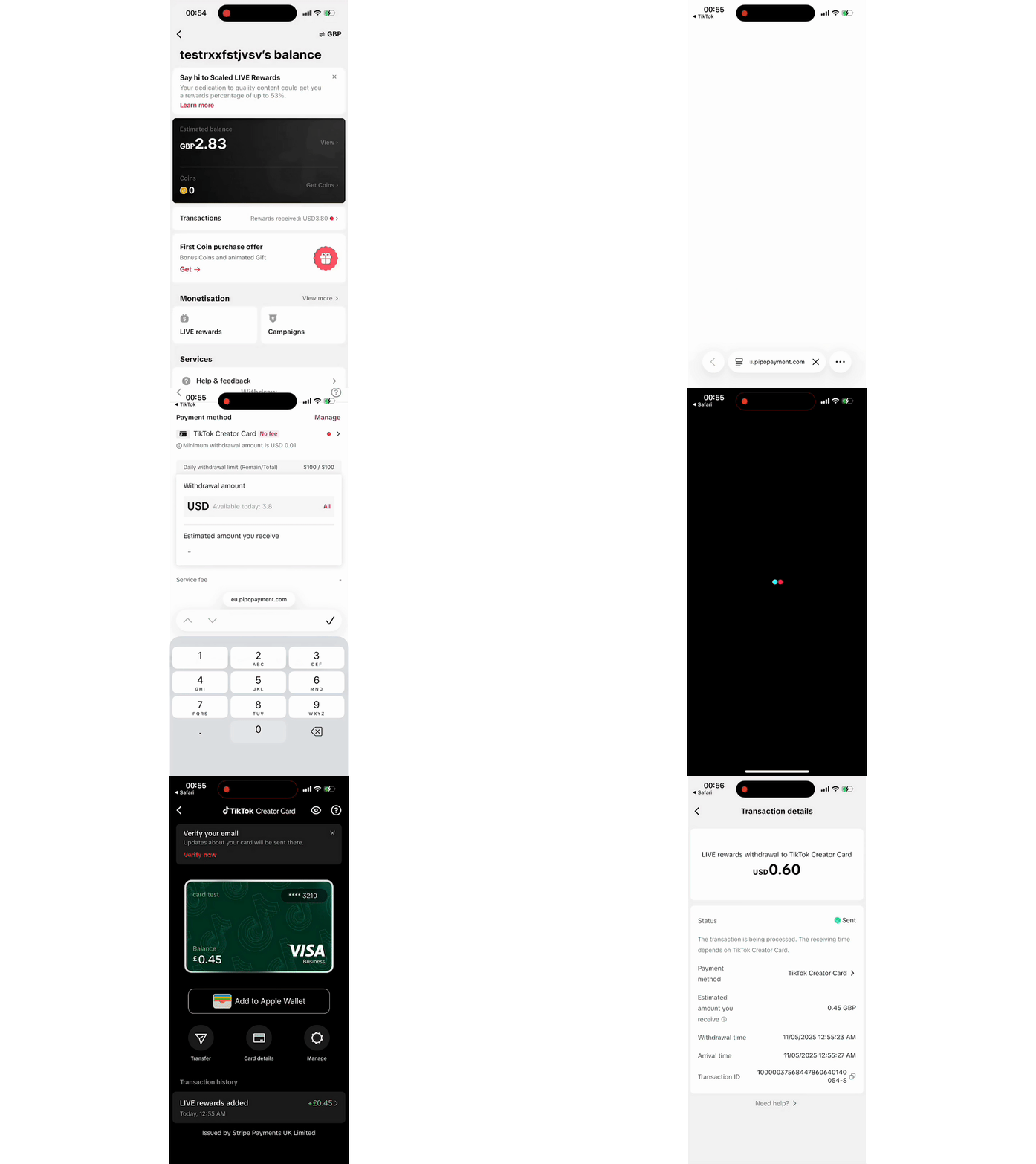
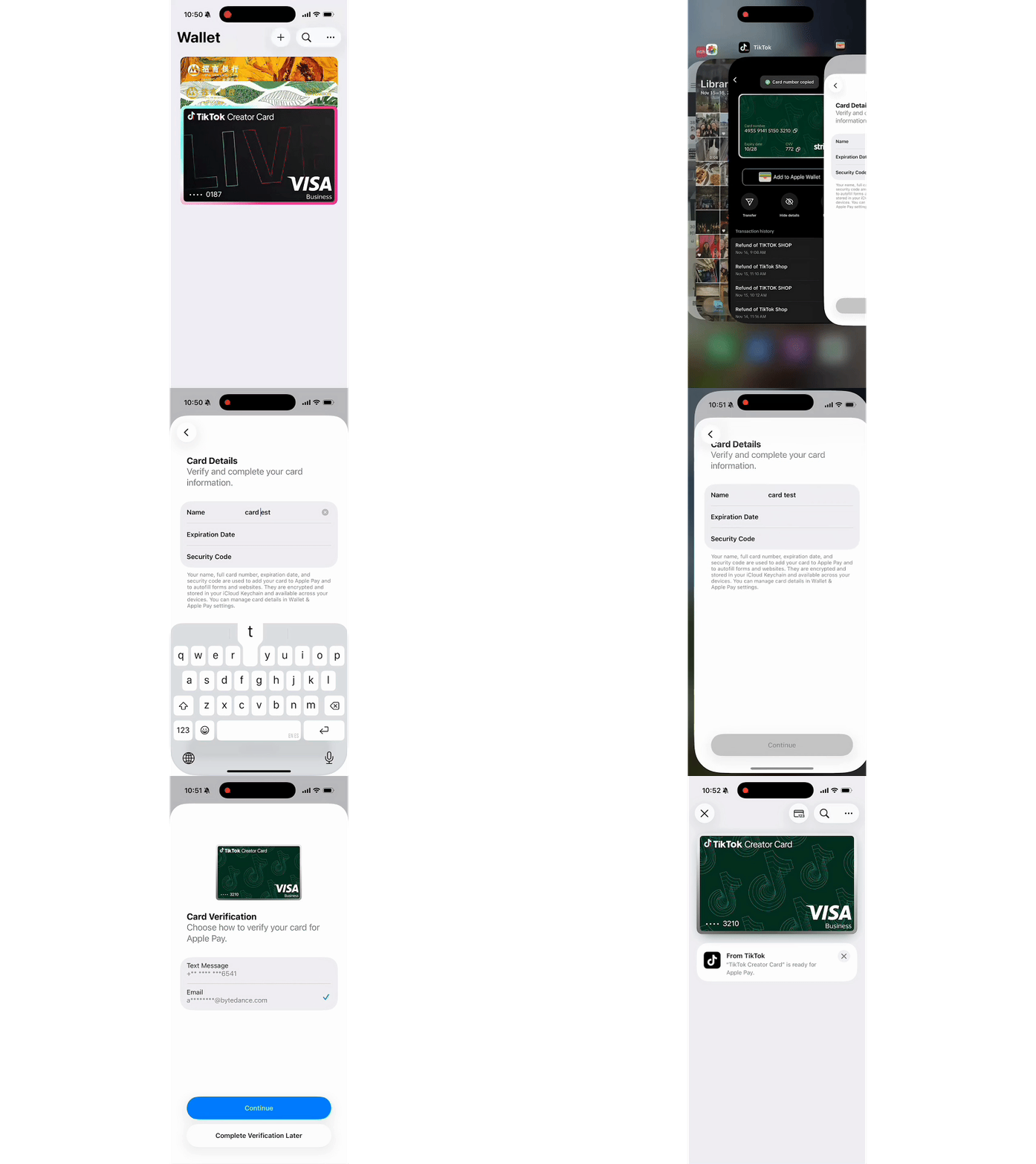
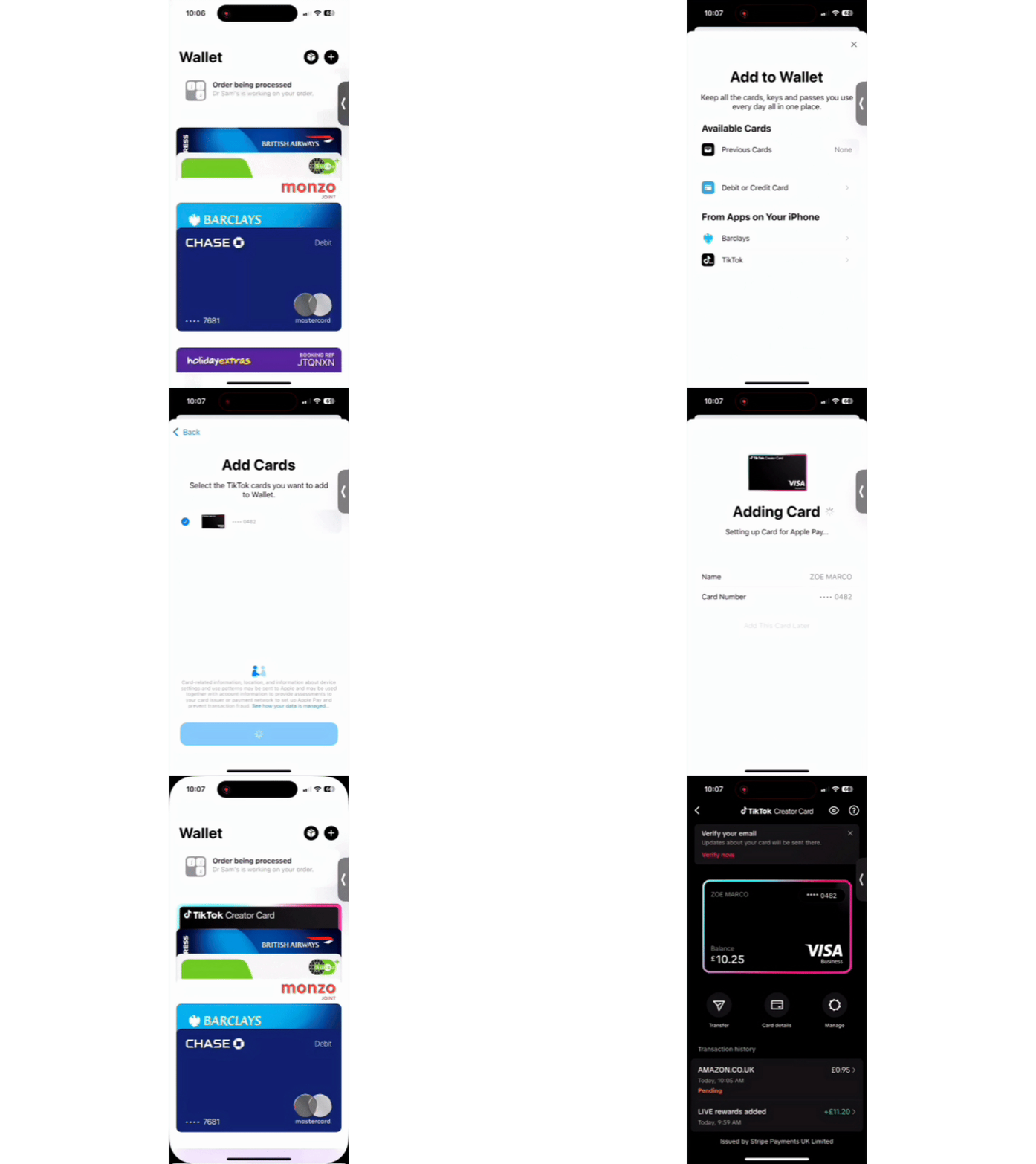
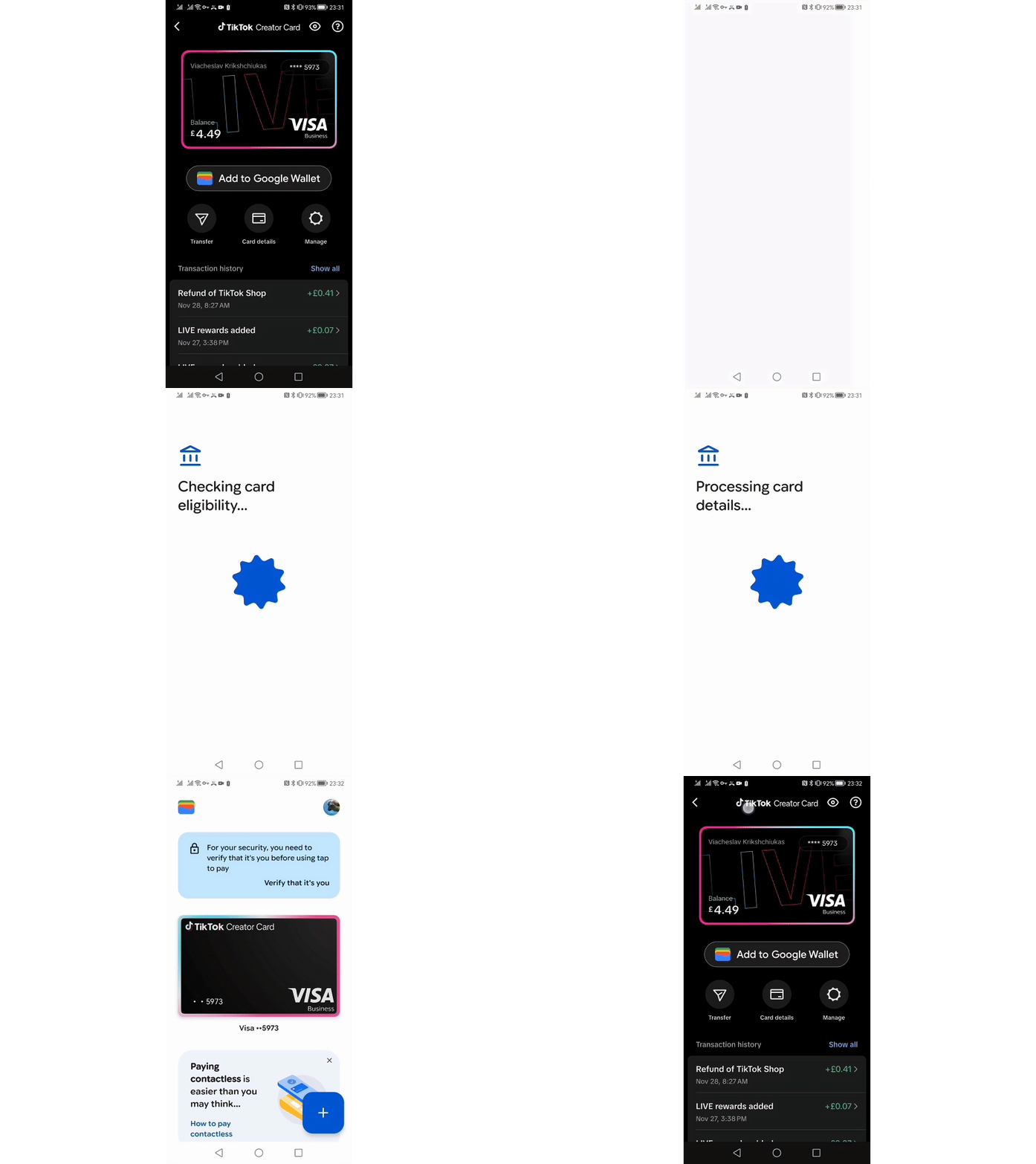
Provisioning was designed across the Creator Card home, Apple Wallet, the TikTok app extension, Apple Watch, and Google Wallet. This reduced dependence on a single in-app button and supported both iOS and Android payment habits.

The card supports TikTok Shop checkout, external online commerce, and in-store payment through the card network or a provisioned digital wallet. This allowed post-launch data to distinguish card issuance from genuine payment use.


Absolute commercial values are confidential, so the results are directional and desensitised. They describe early post-launch behaviour within the eligible cohort and do not attribute every outcome to design alone.
Creator Card 是 TikTok 首张面向创作者发行的实体/虚拟金融卡,MVP 在英国市场接入 TTL(TikTok LIVE)直播收益,通过 Banking-as-a-Service(BaaS)模式,由 TikTok × Stripe × Visa 三方协作落地。它不是替代银行转账或 PayPal,而是在保留原有转出方式的基础上,新增一条更低摩擦、与创作者收入直接绑定的开卡、入账、消费、转账全链路。
围绕创作者收入与支付需求设计,而不是复制一张通用银行卡。产品首先解决入账费用、到账时效与资金可用性,再逐步扩展创作者相关的卡片管理、支付便利与生态权益。
在 Creator Card 之前,TikTok 创作者面临三个真实痛点:提现成本高、到账时效慢、收入无法直接复用于创作投入——这不只是体验问题,更在消耗创作者的动力和留存。
这次竞品研究采用 UX Audit 的方式,先拆解“最好体验是什么、哪些做法要避免”。研究不是从 Uber / Lyft / DoorDash 这类平台卡开始,而是先审计 Revolut、Apple Card、Wise、Monzo、Up bank 等消费级金融产品,再补充 Karat 与 OTH 的创作者专属命题。原因很清楚:创作者虽然像“小型 business”,但他们会用消费级 app 的体验标准来比较我们。
The benchmark uses a UX audit lens: what best-in-class looks like, and what we should avoid. It starts from consumer financial products, not gig-worker cards. Creators may behave like small businesses, but they compare the experience against consumer-grade apps such as Revolut, Apple Card, Wise, Monzo, and Up.
核心判断是:不要只做“平台发卡”,而要先达到消费金融 app 的体验基准,再把 TikTok 创作者身份和生态权益长出来;每个方向都同时看 best-in-class 和反面风险。
The core read is: do not stop at platform card issuance. First meet consumer-finance UX expectations, then layer TikTok creator identity and ecosystem benefits; each track looks at best practice and avoidable risk.
最重要的开卡结论是:消费级竞品在虚拟卡场景下几乎不要求用户填写额外信息,地址通常只在实体卡配送时才收集。Revolut 和 Monzo 还把虚拟卡颜色、命名、卡片类型选择做成轻量的个性化时刻,让“开卡”更像功能激活,而不是金融申请。
The strongest pattern is virtual-card first: consumer competitors require almost no extra information for virtual debit cards, and usually collect address only when a physical card is delivered. Revolut and Monzo also turn card colors, labels, and card types into lightweight moments of personalisation.
Creator Card 应优先做 virtual-card first:复用 TikTok 已有实名、手机号与收益关系,先让创作者拿到可用卡;实体卡地址、更多材料和配送信息后置。权益层面不应照搬通用旅行/保险套餐,而要围绕创作设备、CapCut、税务减免、广告投放和 creator equipment protection 组织。
Creator Card should be virtual-card first: reuse TikTok identity, phone, and earnings context, then collect address or delivery details only for physical cards. Benefits should map to creator workflows, not generic travel bundles.
Karat 的启示不只是“传统银行看不懂创作者收入”,更在于它把创作者天然的传播力变成增长机制:创作者认识创作者,也有社群信任和内容影响力。Karat 通过创作者投资人、创作者案例、定制卡面和创作者专属财务服务,让用户不只是客户,也成为产品的 connector。
Karat is not only about giving creators a card. It turns creators into connectors: people who know other creators, carry social trust, and spread products through influence. Creator investors, creator stories, custom cards, and creator-specific services turn customers into distribution.
TikTok 的优势是我们已经直接连接创作者生态。Creator Card 可以把“只有 TikTok Creator 才能拥有”做成身份入口,再逐步长出创作者服务:创作设备支出识别、税务减免提示、广告投放/merch 权益、创作者邀请或里程碑奖励。MVP 不必复制信用卡,但要保留“创作者会愿意分享”的传播点。
TikTok already has direct access to creators. Creator Card can start from exclusivity, then grow into creator services such as equipment-spend recognition, tax-relief prompts, ad-spend or merch benefits, invitation loops, and milestone rewards.

卡片首页和交易列表需要单独审计:Apple 与 Revolut 用位置追踪提升安全感;Apple / Revolut 用颜色与图标区分交易类别;Wise 的交易筛选可以按收款人或币种路线查找;Monzo 与 Wise 用 +/- 和颜色清晰表达资金流入流出。未来能力上,Revolut / Monzo / Wise 的 spending insights、Wise / Monzo 的 waitlist、Up bank 的虚拟卡生成动效,都是 Creator Card 可以分阶段吸收的方向。
Card home and transaction lists deserve a separate audit: Apple and Revolut use location tracking for security; Apple and Revolut use visual categories; Wise offers powerful transaction filters; Monzo and Wise make inflow and outflow clear with symbols and color. Future ideas include spending insights, waitlists, and Up bank's delightful virtual-card loader.
Creator Card 首页不应只是余额 + 最近交易。即使遵循 TUX 体系,也需要为金融产品补足更强的资金流、交易状态、类别、筛选和安全控制表达;后续可以把 LIVE 收益、TTS GMV、创作设备支出和 Promote 投放整合成 creator spending insights。实体卡暂未开放时,可以参考 Wise / Monzo 做 waitlist,并用人数或队列感制造期待。
Creator Card home should not be only balance plus recent transactions. Even within TUX, the financial use case needs stronger inflow/outflow, transaction states, categories, filters, and card controls. Later releases can translate LIVE income, TTS GMV, equipment spend, and Promote spend into creator-specific insights.
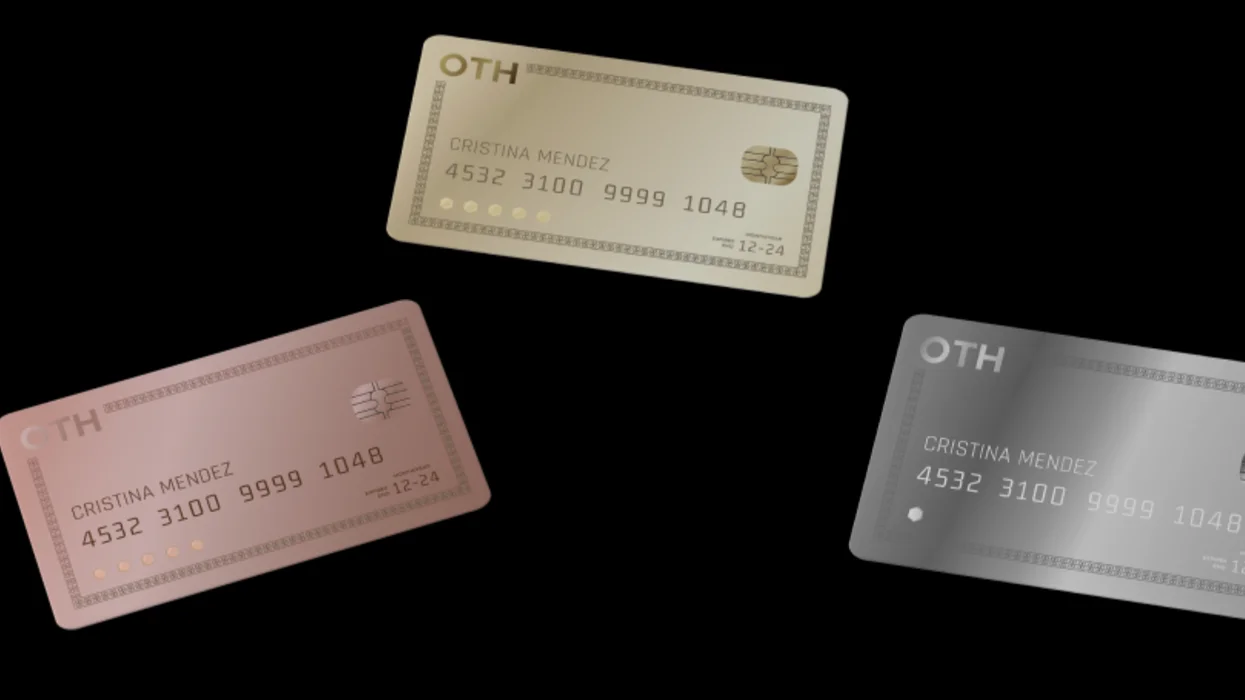
OTH(On The House)展示了更非传统的创作者金融想象:申请不要求 banking details,而是看 social media handles、following count 和内容发布能力。创作者在合作商户消费,代价是到店期间发布 Instagram Stories,让内容行为直接激活卡片消费。它不像主账户,却证明了“影响力可以成为消费权限”的可能性。
OTH shows a non-conventional creator-finance proposition: application relies on social media handles, follower count, and posting behavior instead of banking details. Spending is unlocked through content actions at participating businesses, proving that influence can become access.
Creator Card 不应照搬 OTH 的 barter 模型,但可以吸收它的“生态协同”思路:TikTok 已经拥有创作者 handle、内容表现、LIVE 收益和 TTS GMV 等上下文,因此未来可以把内容贡献转译成卡片权益,例如活动白名单、商户合作权益、专属卡面、Promote credit 或创作工具套餐。
Creator Card should not copy OTH's barter model directly, but it can borrow the ecosystem logic: TikTok already knows handles, content performance, LIVE income, and TTS GMV, which can later become campaign access, merchant benefits, card surfaces, Promote credit, or creator-tool bundles.
从 design doc 的目标定义看,Creator Card 的基础命题不是“再做一张卡”,而是提供一张与创作者收入绑定的虚拟卡:更低摩擦入账,同时保留银行转账和 PayPal 转出;体验上必须让创作者感到荣誉、可信和专属。
我们与 12 位英国 TikTok 全职与兼职创作者进行了面对面和线上深度访谈,覆盖 11k–130 万粉丝量级,系统验证产品核心价值主张,并测试 MVP 关键流程设计。
We conducted F2F and online depth interviews with 12 UK TikTok creators across 11k–1.3M follower tiers to validate core value propositions and pressure-test MVP flow designs.
最终设计不是单一开卡页面,而是一条覆盖入口、开通、资金流转、卡片日常管理和钱包绑定的完整链路。我们把创作者最常发生的任务拆成几个场景,分别处理信任建立、低摩擦激活、提现/转账、卡片控制、交易管理和 Apple Pay / Google Pay 添加。
The final design is not a single application page. It is a full journey across entry, activation, money movement, daily card management, and wallet provisioning, covering trust building, low-friction onboarding, withdrawal, transfer, card controls, transaction management, and Apple Pay / Google Pay add paths.
Creator Card 的入口被放在创作者最有动机处理钱的地方:看余额、看 banner、查看 LIVE rewards、发起 Withdraw、选择 Payout method。每个入口都不直接把用户推入 KYC,而是在对应任务里解释“为什么用 Creator Card 更快、更省、更顺手”。
Creator Card entry points sit where creators are already thinking about money: balance, banner, LIVE rewards, withdrawal, and payout method selection. Each entry explains why Creator Card is faster, cheaper, and easier in that task context.
流程里尽量复用 TikTok 已有实名、手机号和收益关系,只在必要节点确认协议、手机号验证、KYC 与 PIN。卡面选择被放进流程中间,让合规步骤和身份感穿插出现,降低金融表单的疲惫感。
The flow reuses TikTok identity, phone, and earnings context wherever possible, asking for agreement, verification, KYC, and PIN only when necessary. Card design selection adds an ownership moment inside the compliance flow.
开通之后,Creator Card 首页不只是展示余额。它需要承接创作者最常见的资金任务:把 LIVE 收益转入卡、从卡内转出到银行或 PayPal、查看费用和到账状态、管理卡片安全、追踪交易明细、账单和 dispute 入口。
After activation, the card home is more than a balance page. It supports the core money tasks creators need: moving LIVE earnings into the card, transferring out to bank or PayPal, understanding fees and settlement states, controlling card safety, and managing transactions, statements, and disputes.
虚拟卡要成为日常支付工具,关键不只是在卡主页放一个按钮,而是覆盖用户真实会触发绑定的路径。Apple Pay 支持四种添加方式:从 Creator Card 卡主页一键添加、在 Apple Wallet 中输入卡信息添加、通过 TT App extension 唤起添加,以及从 Apple Watch 钱包设置添加;Google Pay 覆盖两种核心路径:从 Creator Card 卡主页添加,以及在 Google Wallet 中手动输入卡信息添加。
For a virtual card to become a daily payment tool, provisioning cannot rely on one button alone. Apple Pay supports four add paths: from the Creator Card home, directly inside Apple Wallet, through the TT App extension, and from Apple Watch wallet settings. Google Pay covers two core paths: adding from the Creator Card home and manually entering card details in Google Wallet.


最终设计要让创作者感到“这真的是我的收入、我的卡、我的身份”。因此日常使用被拆成线上和线下两类:线上既支持 TikTok Shop 生态内默认绑定,也能作为 Visa 卡在 Amazon 等站外电商消费;线下则通过 Apple/Google Pay 或 Visa 完成门店支付,把创作者收入转化为真实世界的可用余额。
The final design needs creators to feel that this is their income, their card, and their identity. Daily use is split into online and offline contexts: online covers TikTok Shop binding and external commerce such as Amazon, while offline supports in-store payment through Apple/Google Pay or Visa.
上线后结果显示,各核心模块表现超过预期,Creator Card 从「提现工具」逐渐成为创作者日常支付的一部分。