Dead-link handoffs静态副本交接
External collaborators exchanged files instead of working from a shared source.外部协作者交换文件,而不是基于共享源工作。
Bring every project contributor into one current, traceable Revit model让每位项目参与者协作于同一份最新、可追踪的 Revit 模型
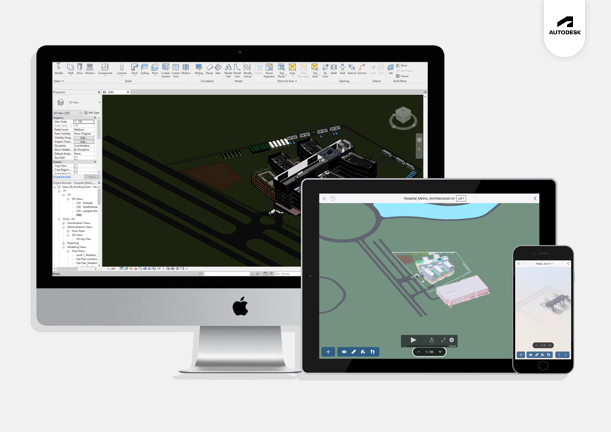
Architecture projects depend on many disciplines and companies. Large internal teams could collaborate through Autodesk's cloud services, while smaller external consultants often exchanged static copies through email, Dropbox or OneDrive. That gap created stale files, unclear ownership and repeated coordination work.建筑项目依赖多个专业与公司共同完成。大型内部团队可以使用 Autodesk 云服务协作,但小型外部顾问往往只能通过邮件、Dropbox 或 OneDrive 交换静态副本。这一断层带来了文件过期、责任不清与大量重复协调。
External collaborators exchanged files instead of working from a shared source.外部协作者交换文件,而不是基于共享源工作。
Teams could not reliably know which model was current or who changed it.团队无法可靠判断哪份模型最新、由谁修改。
A full collaboration subscription was hard to justify for small consultants.完整协作订阅对小型顾问团队成本过高。
How might we give external contributors lightweight access to the same cloud model without weakening version control, security or the internal team's workflow?如何让外部协作者以更低门槛访问同一份云模型,同时不削弱版本控制、安全性与内部团队的工作方式?
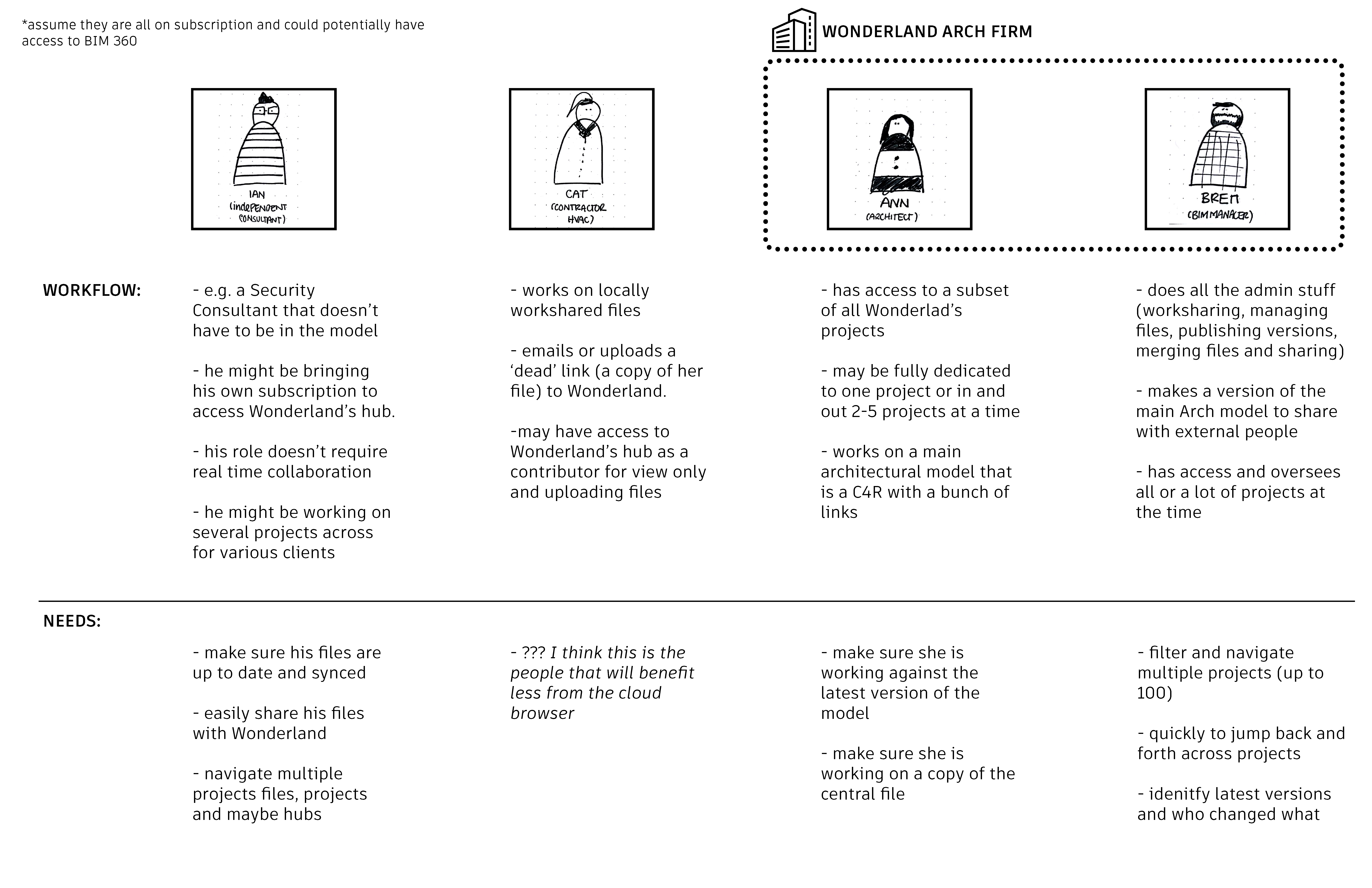
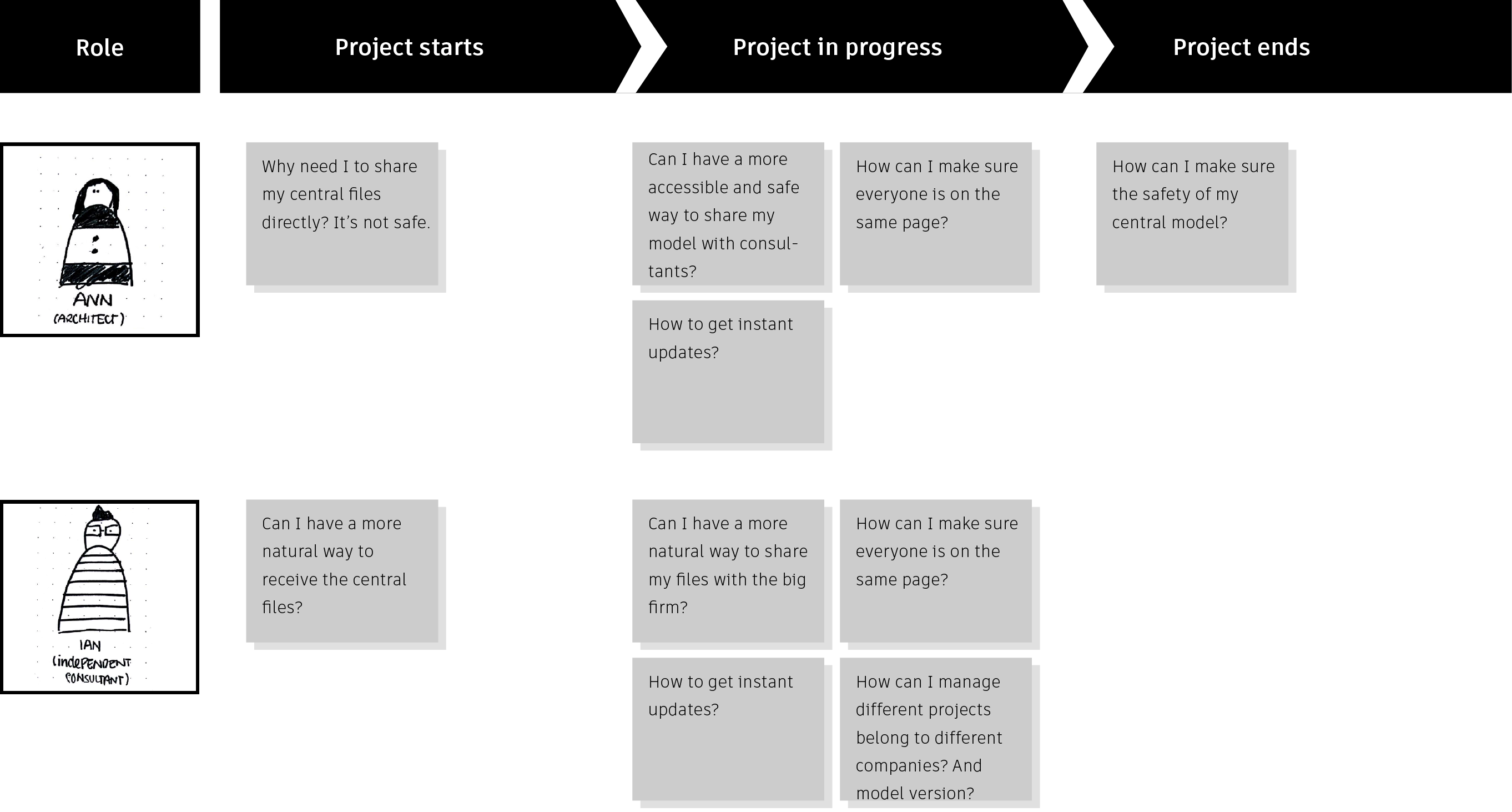
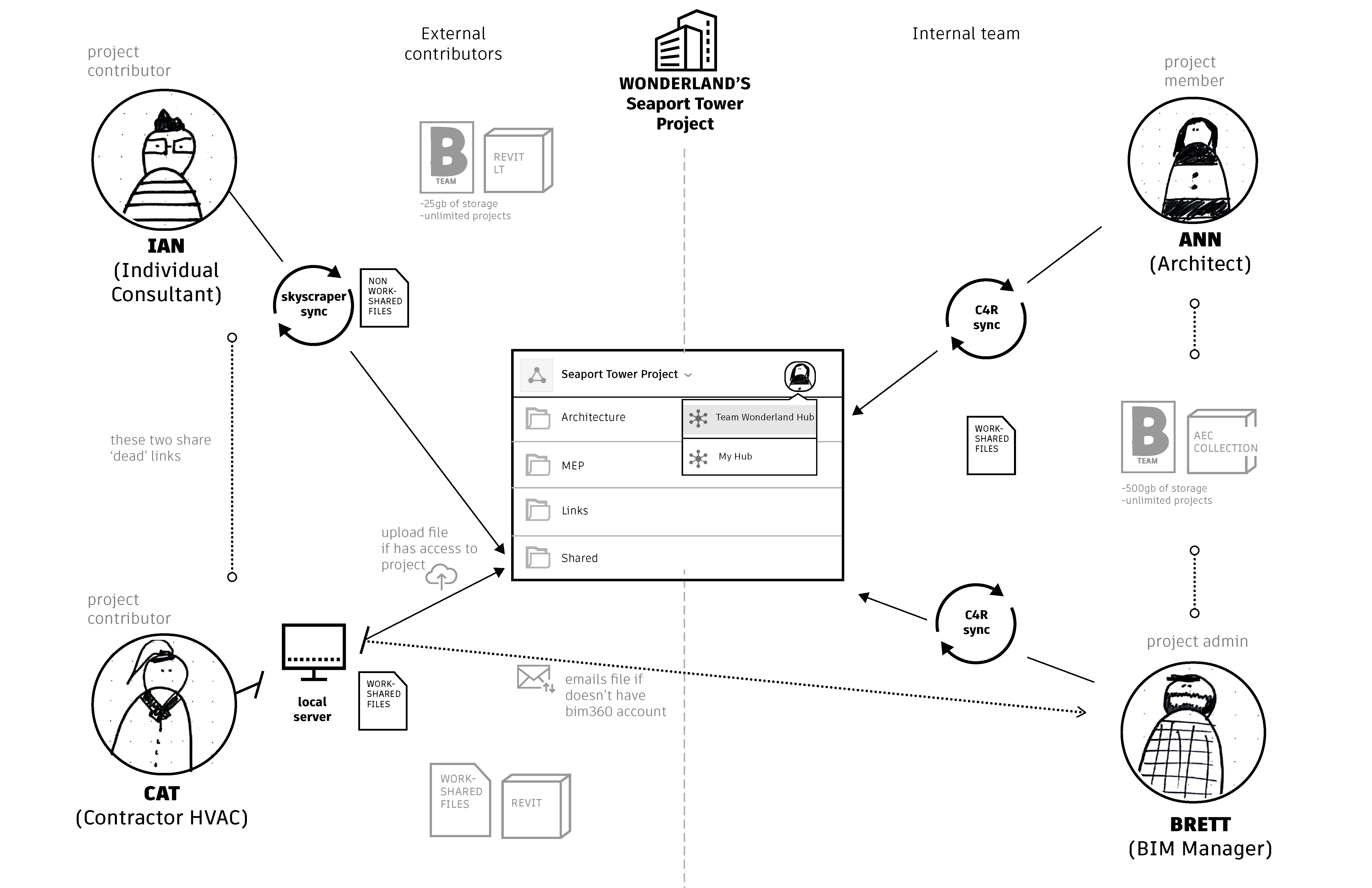
Interviews surfaced four recurring roles. The key tension sat between Ann, an internal architect responsible for the central model, and Ian, an external consultant who needed current files without a heavyweight setup.访谈梳理出四类高频角色。核心矛盾集中在负责中心模型的内部建筑师 Ann 与需要低门槛获取最新文件的外部顾问 Ian 之间。
The experience had to support people who publish and govern the model as well as those who only contribute to part of it.体验既要支持发布和管理中心模型的人,也要支持只贡献其中一部分工作的协作者。
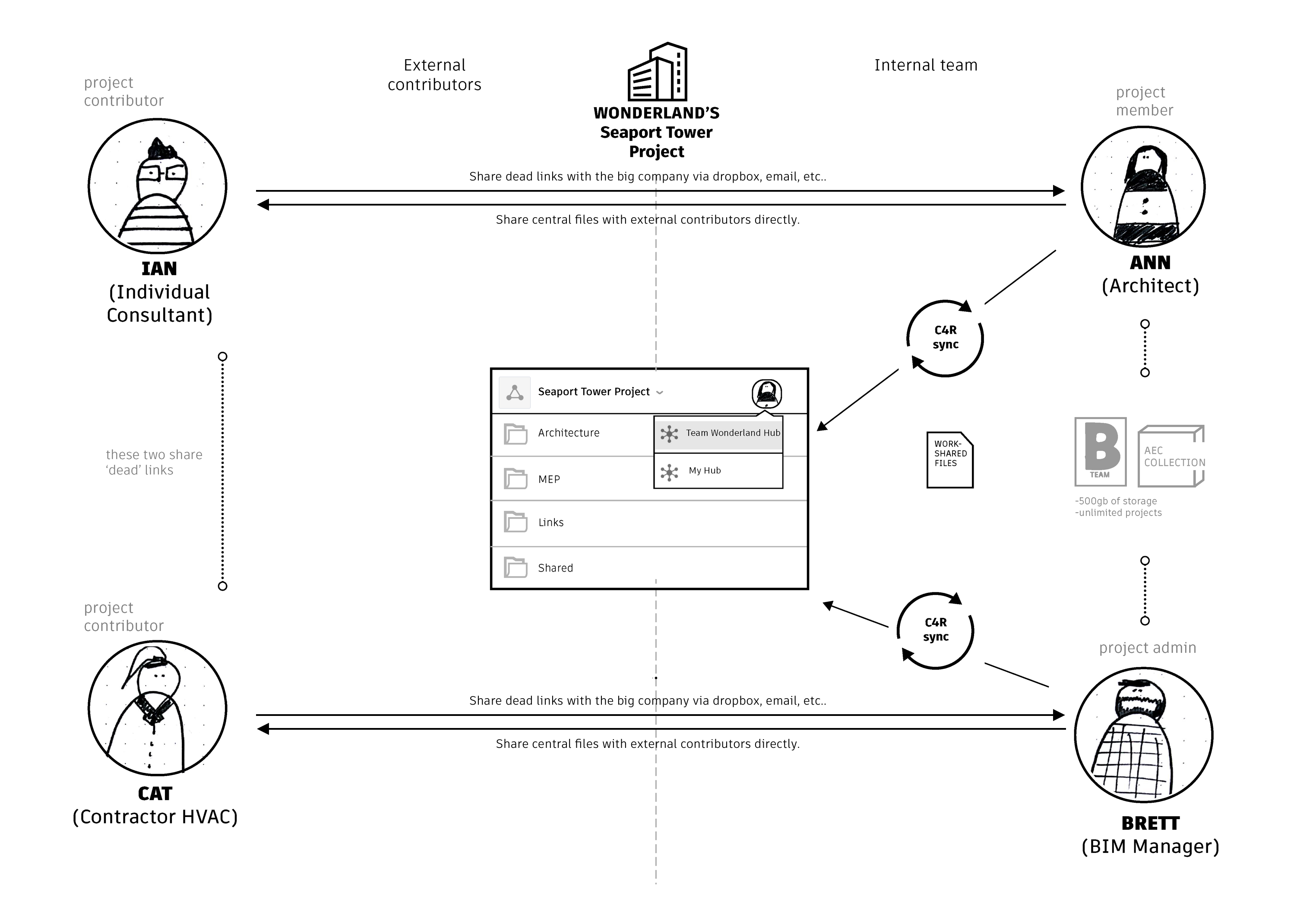
The proposed system connected full Revit collaboration for internal teams with a lighter contribution path for external partners. Both sides could work around one cloud project, current files and visible versions.方案把内部团队的完整 Revit 协作能力与外部伙伴的轻量贡献路径连接起来。双方围绕同一个云项目、最新文件与可见版本工作。
The solution deliberately separates the shared source of truth from the access model, so smaller contributors can participate without taking on the internal team's full setup.方案有意把共享事实源与访问方式分开,让小型协作者无需承担内部团队的完整配置也能参与项目。
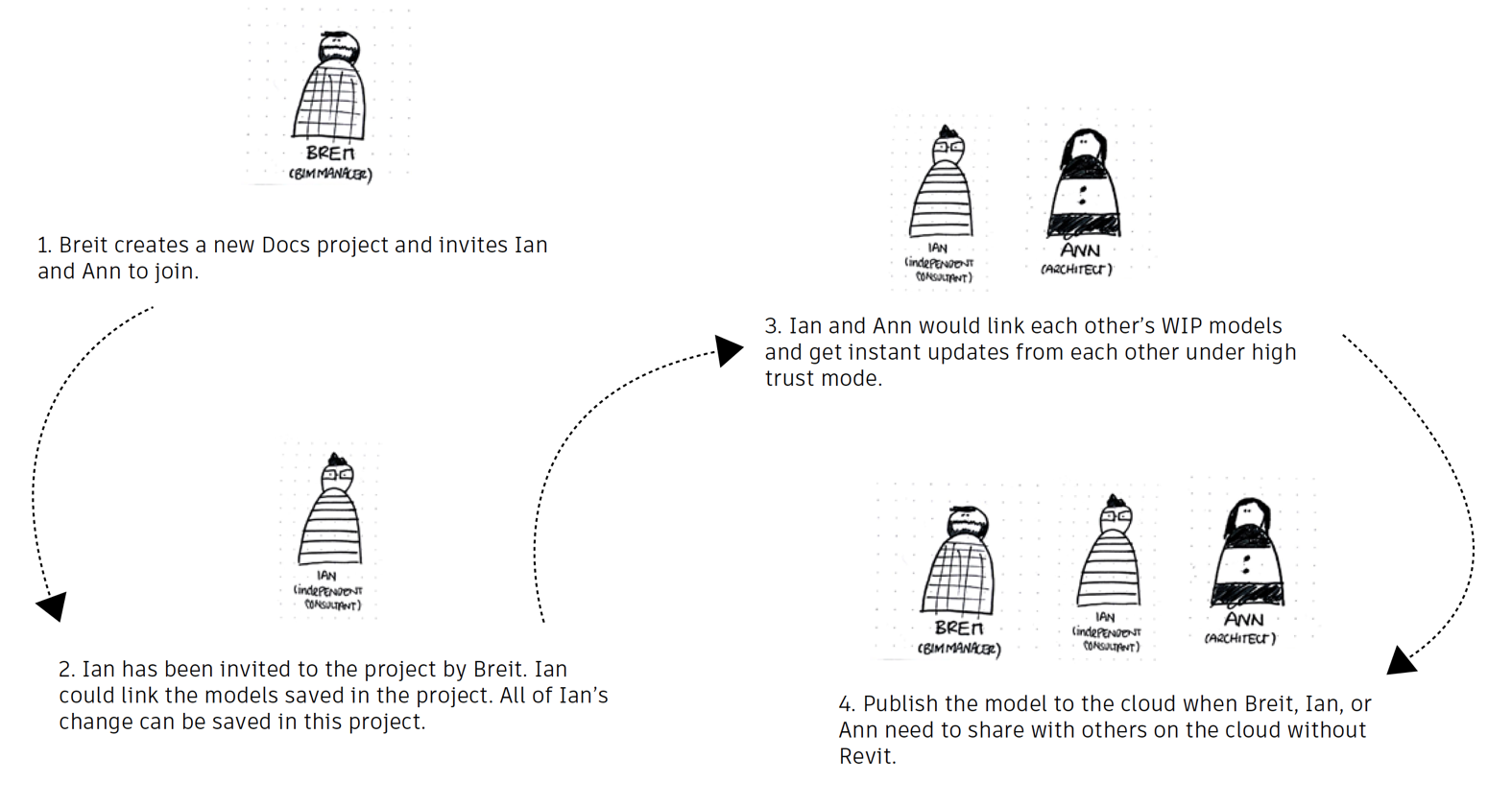
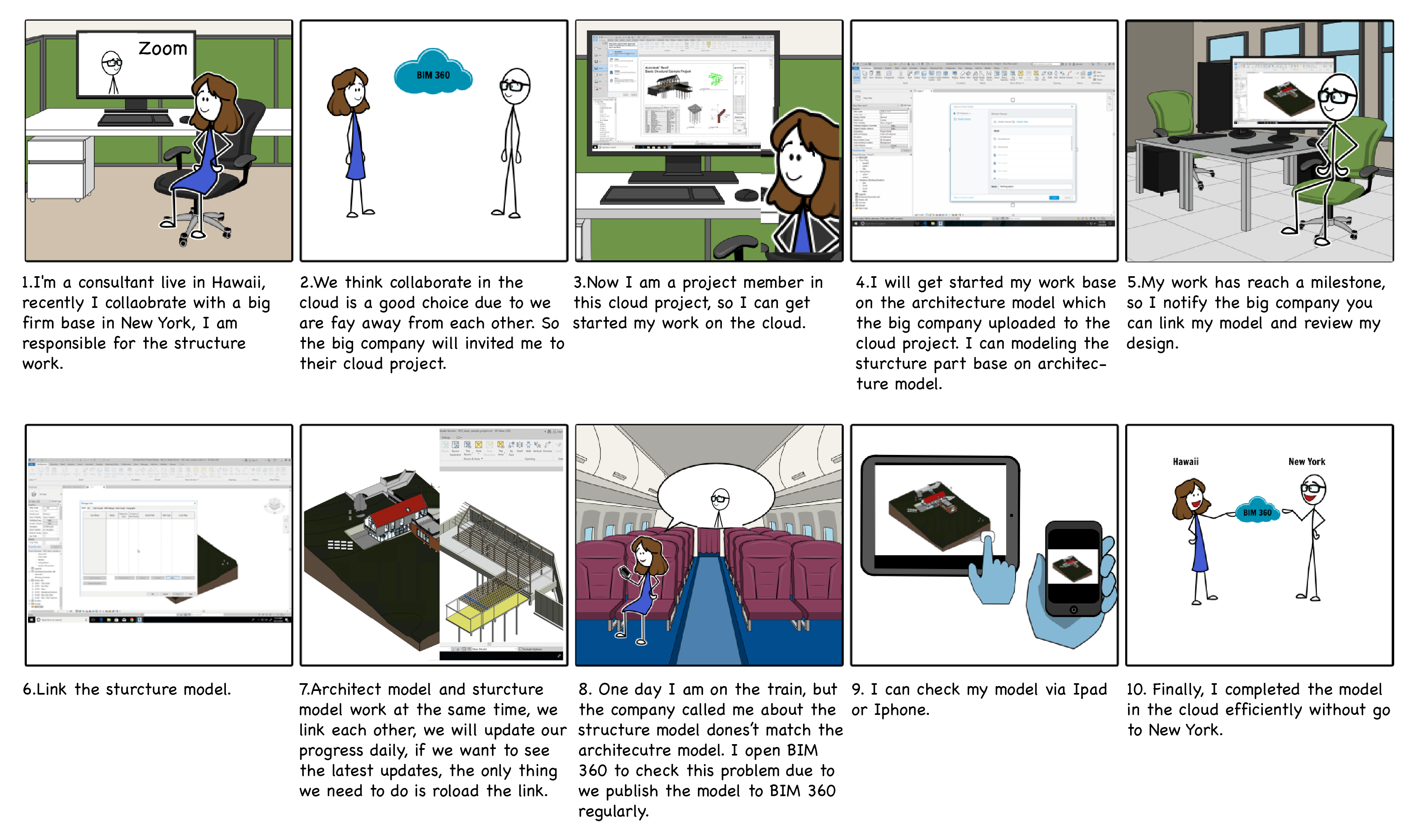
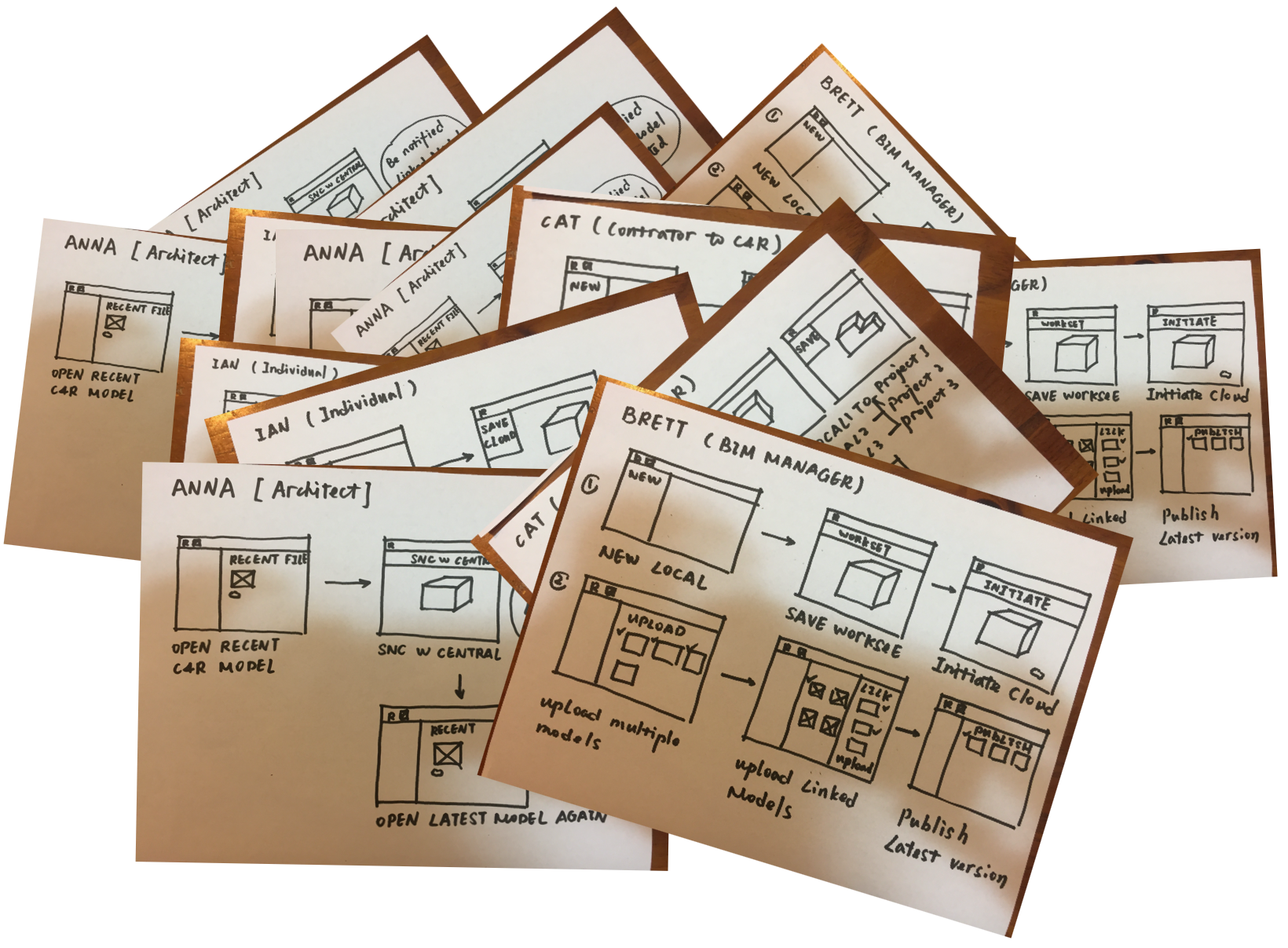
Storyboards aligned the team on user value. Paper prototypes then reduced implementation risk, while detailed interaction drafts separated a near-term release from the longer-term cloud-first experience.故事板先让团队对用户价值达成一致;纸面原型以低成本降低实现风险,详细交互稿则把近期版本与长期云优先体验区分开来。
Show how the solution changes daily work.呈现方案如何改变日常工作。
Connect roles, files and permissions.连接角色、文件与权限。
Test feasibility at low cost.低成本验证可行性。
Plan near-term and ideal states.规划近期方案与理想状态。
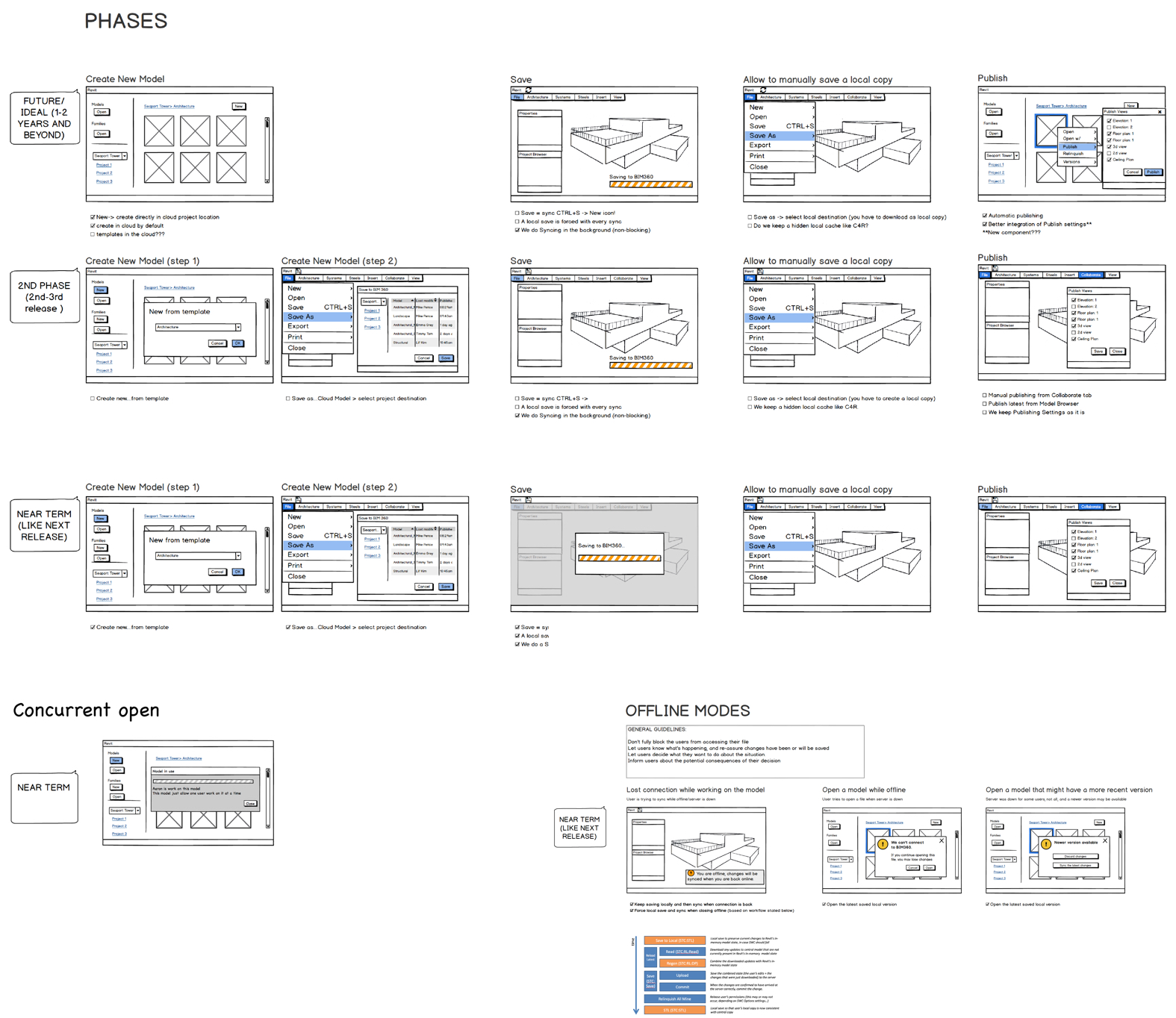
The final visual and interaction design followed Autodesk standards and worked closely with engineering to resolve save, publish, connectivity and feedback states.最终交互与视觉遵循 Autodesk 规范,并与工程团队紧密协作,处理保存、发布、连接状态与反馈等关键细节。
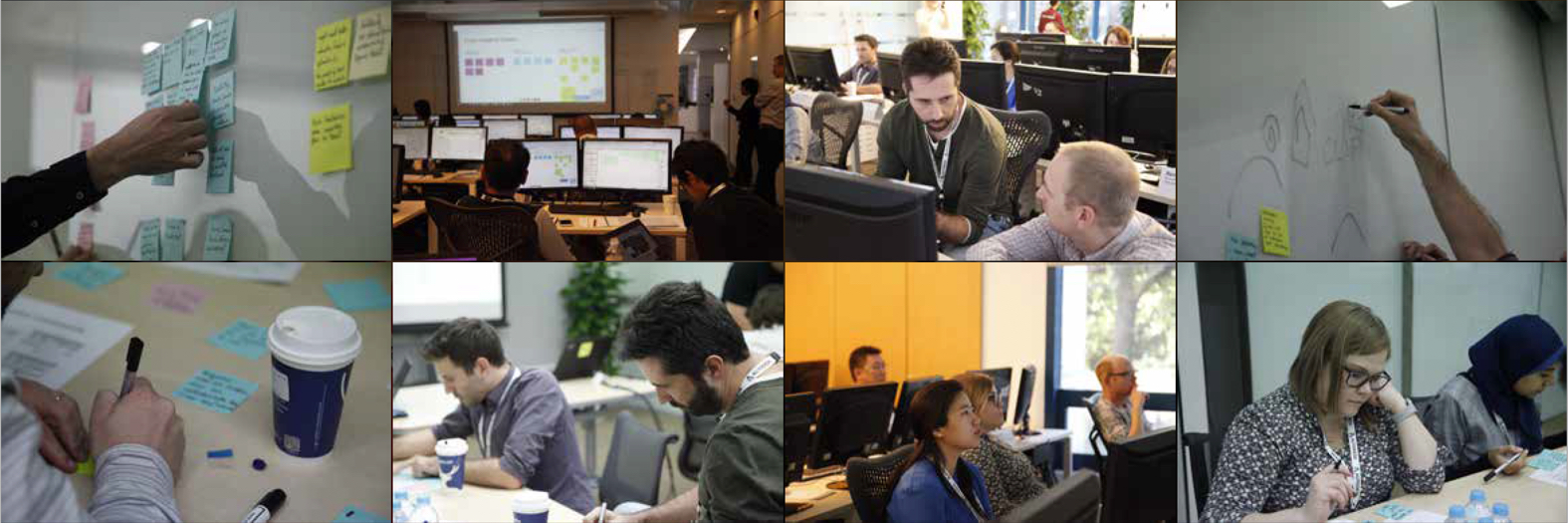
Research checked usability and fit across regions. Instrumentation was planned around the questions the next iteration needed to answer, rather than collecting data without a decision in mind.研究用于检查跨地区的可用性与适配度;数据埋点则围绕下一轮迭代要回答的问题设计,而不是没有决策目标地收集数据。
Face-to-face feature tests in China, the US and Europe.在中国、美国与欧洲开展面对面功能测试。
Observe real use before broad release.在全面发布前观察真实使用。
Probe workflow detail and unmet needs.深入理解流程细节与未满足需求。
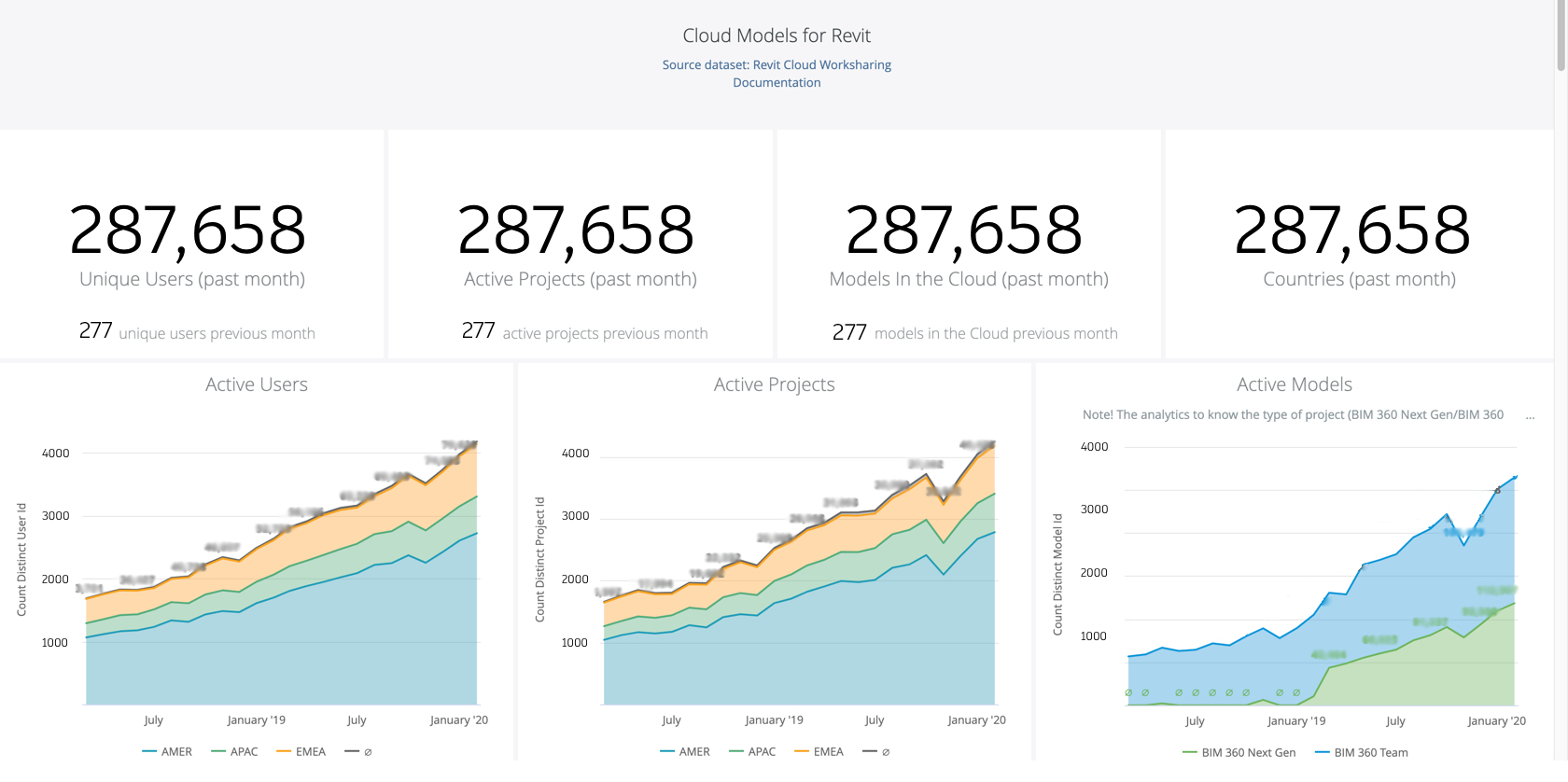
All dashboard data shown in the source material has been deliberately manipulated to protect sensitive information.源材料中的看板数据已做特殊处理,以保护敏感信息。
The work defined how Revit could extend cloud-model value beyond fully equipped internal teams. It connected external access, a shared source of truth, version visibility and phased implementation into one coherent product direction.项目明确了 Revit 如何把云模型价值扩展到完整内部团队之外,将外部访问、共享事实源、版本可见性与分阶段实现连接成一致的产品方向。
Collaboration becomes trustworthy when access is proportional, the latest model is obvious and every handoff remains traceable.当访问门槛与任务相匹配、最新模型清晰可见、每次交接都可追踪时,协作才真正可信。
This project taught me to treat cloud adoption as a workflow transition rather than a feature launch. Teams need a feasible migration path that preserves control while gradually removing the habits that created fragmented files.这个项目让我把上云视为工作方式的迁移,而不仅是一个功能上线。团队需要一条可行的过渡路径,在保留控制感的同时逐步消除造成文件割裂的旧习惯。